


AG Magazine • Health & Nutrition
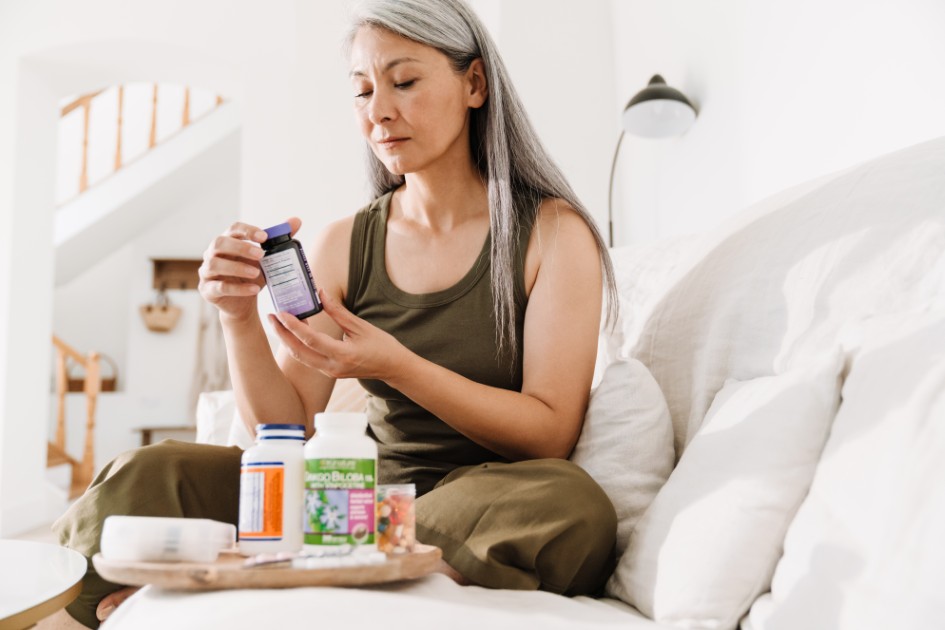
You’d never take a new prescription without asking questions first. But that turmeric capsule, that green tea extract, that pre-workout stack on your counter — did you vet those with the same scrutiny?
Hepatologists are seeing a pattern that used to be rare: patients arriving with unexplained jaundice and abnormal liver enzymes, no infection, no history of heavy drinking, and no clear cause — until someone finally asks what’s in their supplement drawer. Supplement liver damage has quietly become one of the most under-recognized causes of acute liver injury in the country, and the products behind it are marketed as the safest things on the shelf.
This isn’t an argument against supplementing. It’s a correction to a blind spot: the assumption that “natural” and “over-the-counter” automatically mean “harmless.” An estimated 15.6 million U.S. adults are currently taking at least one botanical supplement with documented liver risk, often without their doctor’s knowledge. Here’s what the research actually shows, which products carry the highest risk, and how to protect your liver without abandoning your routine.
How Big Is the Supplement Liver Damage Problem, Really?
The blunt answer to “can supplements cause liver damage” is yes — far more often than most people assume. Supplement liver damage now accounts for roughly one in five cases of drug-induced liver injury in the United States, a share that has climbed sharply over the past two decades and now rivals the number of people affected by common prescription pain relievers.
According to Mayo Clinic, roughly 20% of drug-induced liver injury (DILI) cases in the U.S. are now caused by herbal products. A 2024 JAMA Network Open study found that an estimated 15.6 million U.S. adults used at least one of six potentially hepatotoxic botanicals — turmeric, green tea extract, garcinia cambogia, black cohosh, red yeast rice, and ashwagandha — within a single 30-day period, a volume comparable to the number of people taking prescription NSAIDs.
The trend line is what concerns hepatologists most. Tracking by the Drug-Induced Liver Injury Network shows the share of liver injury cases attributed to herbal and dietary supplements nearly tripled between the mid-2000s and mid-2010s, and supplement-related liver transplants have climbed sharply since. This isn’t a fringe phenomenon on the edge of dietary supplement induced liver injury research — it’s a growing share of a serious diagnosis.
Which Herbal Supplements Are Most Often Linked to Liver Injury?
- Green tea extract — concentrated catechins, especially EGCG, are among the most frequently implicated compounds in green tea extract liver damage cases.
- Turmeric and curcumin — high-dose extracts, not the spice used in cooking, are increasingly tied to liver injury in supplement users.
- Garcinia cambogia — a weight-loss ingredient repeatedly linked to acute hepatitis, sometimes reversible only after stopping use.
- Black cohosh — marketed for menopause symptoms, flagged for rare but severe liver reactions.
- Red yeast rice — a “natural statin” that carries a liver risk profile similar to the prescription drug it mimics.
- Ashwagandha — a popular adaptogen with a growing number of case reports tied to jaundice and elevated liver enzymes.
According to Mayo Clinic, other herbs worth watching include kava kava, kratom, ma-huang (ephedra), and Polygonum multiflorum. This list isn’t exhaustive, and it isn’t a reason to panic — it’s a reason to ask questions before you buy.
Why “Natural” Doesn’t Mean Low-Risk to Your Liver
The natural-equals-safe assumption breaks down for a simple reason: dose, purity, and genetics. Supplement makers aren’t required to prove safety before a product reaches shelves, and your liver has to process whatever is in the bottle regardless of whether it came from a plant or a lab. Per AASLD practice guidance, patients with supplement-related liver failure are more likely to die or need a transplant than patients whose liver failure was caused by prescription drugs — a gap researchers tie partly to delayed recognition, since patients rarely think to mention supplements as a possible cause.
Genetics plays a bigger role than most people expect. The same guidance points to a specific gene variant that sharply raises an individual’s risk of herbal supplement liver injury from green tea extract specifically — meaning two people can take the identical product at the identical dose, and only one develops damage. There’s no simple way to predict who’s vulnerable without genetic testing, which is part of why these injuries catch both patients and clinicians off guard.
Why Are “Stacked” Supplement Combinations More Dangerous?
Stacking — combining multiple supplements, or choosing multi-ingredient blends over single extracts — multiplies risk in ways a single-ingredient product doesn’t. A 2022 review in Food and Chemical Toxicology traced some of the most severe historical cases, including the weight-loss brand Hydroxycut, back to multi-ingredient and adulterated formulations rather than any single isolated compound. When several botanicals are combined, contamination is harder to trace, interactions are harder to predict, and the cumulative liver load compounds. The same review links this pattern to blends marketed for fat loss and “energy” — categories where supplement stacking is the norm rather than the exception.
The Warning Signs Your Liver Sends Before It’s Too Late
If your liver could send a memo before it got sick, wouldn’t you want to read it? According to Cleveland Clinic, the signs of liver damage from toxic exposure are easy to write off as something else entirely.
Persistent fatigue that doesn’t improve with rest
Unexplained nausea or loss of appetite
Dull pain or fullness in the upper right abdomen
Darker urine or unusually pale stools
Yellowing of the skin or eyes (jaundice)
None of these signs of liver damage are exclusive to supplement use, which is exactly the problem — they’re easy to dismiss until a routine blood panel turns up elevated liver enzymes. If you notice two or more of these signs while taking any herbal product, stop the supplement and get a liver panel before continuing.
⚡ PRO TIP
Before you start — or stack — any herbal supplement, ask your doctor for a baseline liver panel (ALT and AST) and a follow-up test 4 to 8 weeks later, especially with green tea extract, high-dose turmeric, red yeast rice, or any multi-ingredient blend. A simple two-test habit can catch injury while it’s still reversible, long before symptoms would ever tip you off.
Read the Label Like You’d Read a Prescription
None of this means quitting supplements altogether. It means treating them with the same scrutiny you’d apply to anything else that passes through your liver. A case report published in Cureus shows how easy it is to miss: a patient’s acute liver injury traced back to a self-brewed herbal tea, and her liver function normalized only after she stopped drinking it — a diagnosis that took weeks of testing to reach because no one initially thought to ask about herbal tea.
Supplement liver damage is largely preventable, but only if you close the information gap your doctor doesn’t know exists. Bring every supplement bottle to your next appointment, ask for a baseline liver panel before starting anything new, avoid combining multiple hepatotoxic-flagged ingredients, watch for the warning signs above, and never assume a product is safe just because it’s sold without a prescription. Skepticism isn’t anti-wellness — it’s the most pro-wellness habit you can build. Your liver can’t send a memo when it’s struggling, so give it the same attention you give everything else on your plate. As always, this is general information, not a substitute for medical advice — talk with your doctor or a hepatologist before starting, stopping, or combining any supplement, especially if you have existing liver risk factors.