


AG Magazine • Fitness & Performance
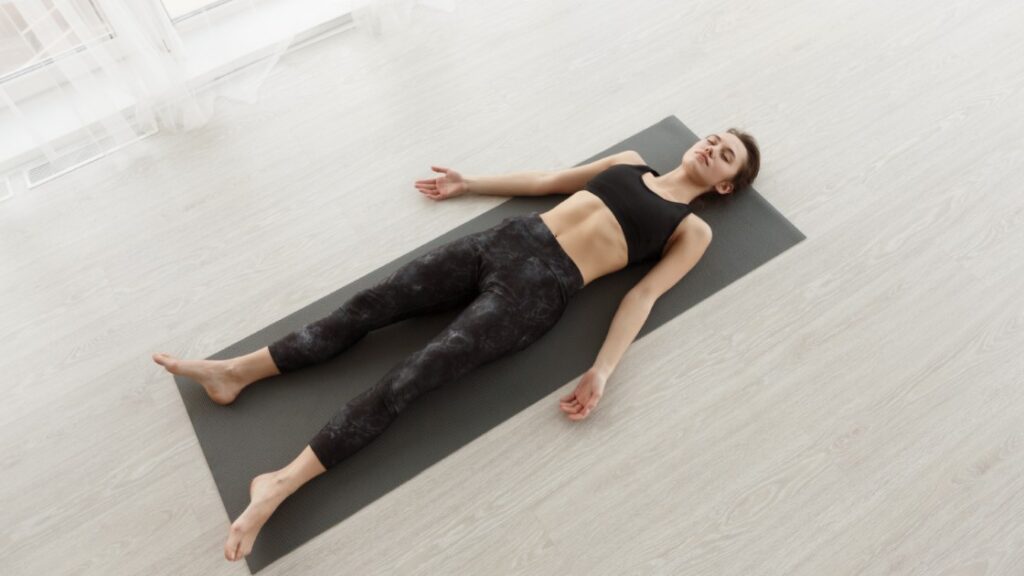
What if the most effective mobility routine for your back, hips, and balance is one you do entirely lying down? No standing stretches. No yoga flow. No equipment. Just you, the floor, and ten focused minutes.
That is the quiet shift happening in serious training spaces right now. A floor mobility routine — performed supine, on your back — is producing the kind of gains in hip range and lumbar control that older stretching habits never quite delivered. The reason is mechanical, and the evidence is hiding in the rehab literature most lifters never read.
Here is what the science actually says about ground-based mobility, why it outperforms standing flexibility work for most people, and the 10-minute sequence you can start tonight.
What Is a Floor Mobility Routine, and Why Does Lying Down Work?
A floor mobility routine is a short sequence of supine and prone exercises — hip openers, lumbar resets, leg lifts — performed on the ground rather than standing. Lying down removes balance demand, eliminates compensatory bracing, and lets your hips and spine move through their full range under low spinal load. That is why physical therapists prescribe it for the lower back.
The mechanical case is simple. When you stretch standing up, your nervous system splits its attention between holding you upright and lengthening tissue. On the floor, that split disappears. A 2021 systematic review of core stability research in non‑specific chronic low back pain found that ground‑based stabilization exercises produced significant reductions in pain intensity and disability scores — precisely because patients could load the deep core and hip stabilizers without the spine compensating against gravity.
That matters more than it used to. According to CDC National Health Interview Survey data published in 2021, 39.0% of U.S. adults reported back pain in the past three months — the most prevalent pain site in the country. Most of those people are being handed standing flexibility programs that do not address how their hips actually move under their spine.
The Sitting Problem That Floor Mobility Solves
Modern hips are stuck. Cleveland Clinic clinicians warn that sitting for extended periods reduces the natural lubrication between joints, weakens supporting muscles, and produces stiffness specifically in the lower back, hips, and knees. The longer you stay folded at 90 degrees, the more your hip flexors adapt to that folded length — and the harder they pull on your lumbar spine when you finally stand.
The two muscles doing the pulling are the psoas and the iliacus, the deep hip flexors. Harvard Health describes them as the group that helps you bend and lift your legs when you walk, climb stairs, and sit — and they shorten predictably in people who spend most of the day at a desk. Standing stretches reach them awkwardly. Supine positions reach them directly.
Does floor mobility actually fix tight hip flexors?
Yes — because supine positions isolate the hip joint from the lumbar spine. A 2024 EMG review in PMC examined which exercises actually activate the iliopsoas. Supine hip flexion and leg lowering produced more than 60% of maximum voluntary contraction in ranges around 60 degrees of hip flexion — levels that closed‑chain standing drills rarely reach. The floor is where the deep hip flexors are most accessible.
Why is supine work better than standing stretches for the lower back?
Because it decouples mobility from stability. Standing, your spine has to brace against gravity while your hip tries to move. Lying down, the spine is supported — you can train end‑range hip motion without the back compensating. A 2025 clinical study on patients with chronic low back pain and restricted hip extension found that adding hip mobility exercises to a standard spinal stabilization program produced significantly better postural stability and lower disability scores than stabilization alone.
The 10-Minute Floor Mobility Routine
Each move below is a supine progression. Move slowly. Do not chase depth. Two minutes per exercise, performed in this order, hits the major hip and lumbar restrictions in roughly 10 minutes.
- 90/90 hip switches — Lie supine, knees bent at 90 degrees, feet flat. Drop both knees to one side until the lower leg rests on the floor, then switch. Two minutes. This opens internal and external hip rotation simultaneously — a range most adults have lost.
- Supine figure‑4 hold — Cross right ankle over left thigh, pull the left thigh toward your chest. One minute each side. This is the most direct piriformis and posterior‑hip‑capsule stretch available without standing.
- Dead bug — Knees and hips at 90 degrees, arms up. Slowly lower one arm and the opposite leg, return, switch. Two minutes. This teaches your core to stabilize the spine while the limbs move independently — the exact pattern your back loses when you sit all day.
- Knees‑to‑chest reset — Pull both knees gently toward your chest. Hold one minute. This decompresses the lumbar spine and resets the lower back’s resting tone before you stand back up.
- Supine pelvic tilts — Feet flat, knees bent. Tilt the pelvis to flatten the lower back into the floor, then arch slightly. Two minutes. This restores neutral pelvic control — the foundation of everything you do standing depends on.
⚡ PRO TIP
Do this routine first thing in the morning or immediately after sitting for more than two hours. The point is not flexibility for its own sake — it is restoring the resting position of your hips and spine before you ask them to perform. Two minutes of floor mobility before a workout will outperform ten minutes of standing stretches every time.
Why Floor Mobility Is the Best 10-Minute Investment You Can Make
Beyond the immediate relief, there is a longer arc here. A Harvard Health summary of a 13‑year flexibility study reported in December 2024 that older adults with greater joint flexibility had a lower risk of premature death than those with less. The 3,139‑participant study found the association was strongest at the hips, shoulders, and spine — the exact joints a floor mobility routine targets.
Frequency matters too. The American College of Sports Medicine’s flexibility guidelines, summarized by Harvard Health, recommend flexibility work for all major muscle‑tendon groups at least two to three times per week, with daily training producing greater gains. Ten minutes on the floor, four to six days a week, falls comfortably inside that window — and unlike a 60‑minute yoga class, you will actually do it.
Get on the Floor. Stay There Ten Minutes.
The shift to ground‑based mobility is not a trend — it is a correction. We spent a decade chasing standing flexibility routines that asked our bodies to perform two demanding tasks at once, and we got hips that move worse than our grandparents’ did at the same age. The floor takes one of those tasks away. What is left is the actual mobility work.
Tonight, before bed or before your next workout, give it ten minutes. Five moves. Two minutes each. Track how your lower back feels at hour two tomorrow morning, and whether your hips track cleaner in your first squat or stride. Build a floor mobility routine into the bottom of every training day this week, and let your hips and back tell you what a decade of standing stretches missed.