

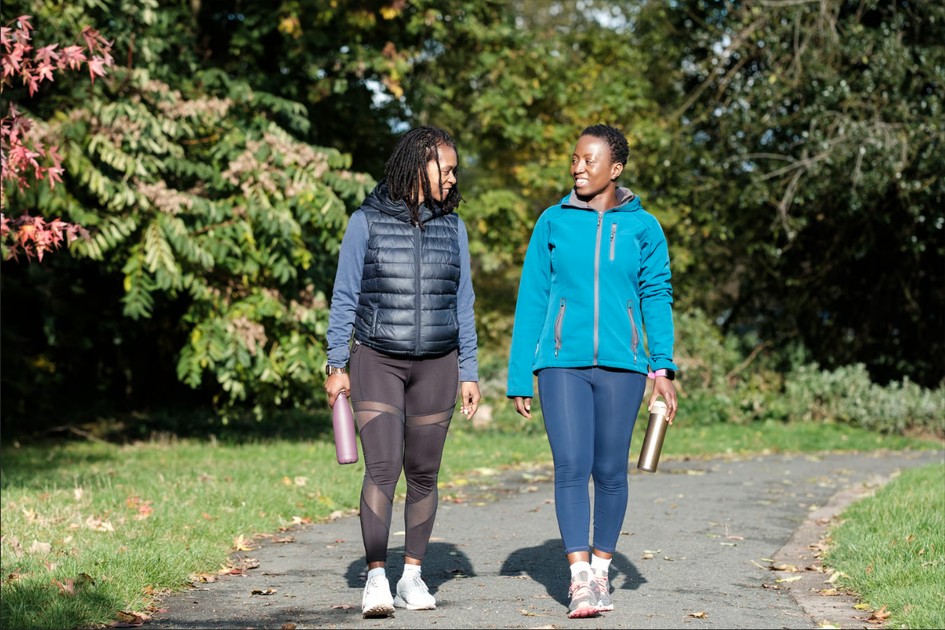
You plan every meal and never miss a prep day. Your workouts, though, happen when life allows. If that sounds familiar, a 2026 review in Mayo Clinic Proceedings has a message for you. Researchers from Arizona State University and Kaiser Permanente compared decades of studies on diet, exercise and fitness. According to the ASU News release on the review, the lowest diet quality was linked to a 3% to 20% higher risk of death from any cause. Not exercising and sitting almost all day was linked to a 46% to over 163% higher risk.
That gap is big enough to make anyone with strict food rules look twice at their training log. It doesn’t mean food stops mattering. Even the review’s authors say you should do both. It means movement may be the bigger lever, and it’s often the one careful eaters pull least.
Here’s how the fitness vs diet question stacks up in the research, why cardiorespiratory fitness and daily steps carry so much weight, where diet quality still earns its place, and how to rebalance a week that’s heavy on food rules and light on movement.
Get more like this — weekly.
One email a week. Research-backed wellness, translated into things you can actually do. No spam.
Fitness vs Diet: Which Matters More for Longevity?
In the research on fitness vs diet, physical activity and cardiorespiratory fitness show a much stronger link to how long you live than diet quality does. Being sedentary carries a far larger risk than eating poorly. Diet still matters, and the lowest risk shows up in people who do both: move often and eat well.
The 2026 review compared existing meta-analyses and cohort studies. It isn’t a new trial, so its numbers describe associations, not proof of cause. Still, the pattern held. ASU exercise physiologist Glenn Gaesser put it plainly: “In every instance, it was physical activity or cardiorespiratory fitness that had a much stronger relationship to your longevity prospects.”
Can exercise cancel out a bad diet?
Not fully. In studies that measured both, the ASU release says high activity or fitness seemed to largely eliminate the excess risk tied to a lower-quality diet. A large single analysis paints a more balanced picture.
A 2022 study led by University of Sydney researchers, published in the British Journal of Sports Medicine, tracked 360,600 British adults in the UK Biobank. People with both high physical activity and a high-quality diet had the lowest risk of death, with 17% lower all-cause mortality than inactive people with the worst diet. The researchers concluded that you can’t outrun a poor diet. Movement carries more weight, but the best results come from stacking both.
Why Cardiorespiratory Fitness Is Such a Strong Signal
Cardiorespiratory fitness is how well your heart, lungs and muscles use oxygen during sustained effort. It’s usually measured with a treadmill test, and it reflects months and years of training, not one good week.
A 2018 study of 122,007 people who took treadmill tests at Cleveland Clinic between 1991 and 2014 sorted them into five groups, from low to elite. As Cleveland Clinic reported, elite performers had an 80 percent reduction in mortality risk compared with lower performers. The risk tied to poor fitness was comparable to or even exceeded that of traditional risk factors such as cardiovascular disease, diabetes and smoking. This was retrospective, observational research, so it shows a strong link rather than cause.
The good news: Cleveland Clinic noted that aerobic fitness is something most patients can control.
Daily Movement Counts More Than You Think
The 2026 review highlighted a small, doable target. For sedentary people, adding about 2,000 steps a day, roughly a mile, was linked to a 25% to 50% lower risk of death.
How many steps a day lower mortality risk?
A 2022 meta-analysis in The Lancet Public Health pooled 15 cohorts with 47,471 adults. Compared with the lowest step group, which averaged about 3,500 steps a day, people in the highest group, about 10,900 steps a day, had roughly half the risk of death. The benefit leveled off at about 8,000 to 10,000 steps a day for adults under 60 and about 6,000 to 8,000 for adults 60 and older.
So if you’re 42 and your desk days barely reach 4,000 steps, you have plenty of room to gain before you hit any plateau.
Easy ways to add 2,000 steps without a new program:
- Walk your calls: take phone calls on your feet, or pace for the first ten minutes of each one.
- Build in distance: park at the far end of the lot, or get off transit one stop early.
- Post-meal loops: a 10 to 15 minute walk after lunch or dinner.
- Stairs by default: take the stairs for anything under three or four floors.
- Active weekends: swap one sit-down plan for a hike, a bike ride or a long walk with friends.
Where Diet Quality Still Earns Its Place
Does diet quality still affect lifespan?
Yes. A large study summarized by the Harvard T.H. Chan School of Public Health followed 119,315 women and men for 36 years. A higher score on at least one of four healthy eating patterns was linked to a lower risk of premature death from all causes, and from cardiovascular disease, cancer and respiratory disease. The patterns shared whole grains, fruits, vegetables, nuts and legumes.
That’s real protection, so your food habits aren’t wasted. The fitness vs diet question is about where your next hour of effort pays off most. If you already eat well, the 2026 review suggests your next gains are more likely to come from moving more than from tightening your food rules further.
How to Rebalance a Food-First Week
Keep the meals that work for you. Then give training the same structure you give food.
How do you improve cardiorespiratory fitness after 40?
Start with the baseline in the CDC’s adult activity guidelines: 150 minutes a week of moderate-intensity activity such as brisk walking, or 75 minutes of vigorous activity, or a mix of both, plus muscle-strengthening on at least two days. The CDC also says some physical activity is better than none, so begin where you are.
Build an easy aerobic base first, then add one or two shorter, harder sessions a week as you get comfortable. Our Zone 2 cardio training guide covers the base, and our breakdown of vigorous exercise benefits covers the harder days. If you have a heart condition, high blood pressure or another health concern, talk with your clinician before you ramp up intensity.
⚡ PRO TIP
Schedule movement the way you schedule meals. When you plan your food for the week, block three cardio sessions and a daily walk in your calendar. Attach each walk to something you already do, like a call or your morning coffee, so it happens even on busy days. As Gaesser says, the best exercise is the one you stick with.
Eat Well. Then Go Move.
Your food discipline is an asset. It just isn’t the whole story. Fitness and daily movement show the stronger relationship with how long you live, and the best outcomes show up when you do both.
Review co-author Robert Sallis, a Kaiser Permanente physician, summed it up: “Exercise is the more powerful medication, but you should do both together.” Keep the food habits. Add the steps. Build the engine.
This week, add 2,000 steps a day and book two 30-minute brisk walks or easy rides in your calendar. Keep your food habits as they are, and let movement carry more of the load. This article is educational, not medical advice, so check with your clinician before starting or stepping up an exercise program if you have a heart, lung, joint or metabolic condition.




No one seems to have shared their thoughts on this topic yet
Leave a comment so your voice will be heard first.