
Introduction: Why Simplicity Wins in Strength Training
You don’t need 20 different exercises in your routine – you need the right six. In a fitness world buzzing with complex workouts, a contrarian minimalist approach can be a game-changer. Research shows that a “minimal effective dose” of strength training really works outsideonline.com. In fact, experts recommend focusing on just a few compound movements (multi-joint exercises) that work multiple muscles at once. For example, performing one leg exercise (like a squat), one upper-body push, and one upper-body pull can efficiently train your whole body. By prioritizing quality over quantity, you maximize results and save time.
Whether you’re a busy professional with limited gym time, a high-performance athlete doubling down on fundamental lifts, or a general strength-seeker craving real results, these six exercises have you covered. They deliver the biggest bang-for-your-buck in strength gains, and you can do many of them with minimal equipment (or even at home). Below, we break down the six high-return movements – including an essential isometric hold for core strength – that can build head-to-toe power, along with why each deserves a place in your workout routine.
The 6 Essential Strength Exercises:
- Squat – The foundation for lower-body power and mobility.
- Deadlift – The ultimate full-body hinge movement for posterior-chain strength.
- Bench Press / Push-Up – The classic horizontal press for chest, shoulders, and triceps.
- Overhead Press – The vertical press for shoulder strength and core stability.
- Pull-Up – The unrivaled upper-body pull for back, biceps, and grip.
- Plank (Isometric Core) – The isometric core exercise for rock-solid stability.
Each of these exercises is proven to deliver strength and functional fitness benefits. Let’s explore why these six moves can replace dozens of others – and how to incorporate them into an efficient, effective program.
1. Squats – The King of Full-Body Strength and Mobility
If you could only do one exercise, many experts would say: do squats. The squat is a fundamental human movement – you squat every time you sit down or stand up. It’s no surprise that squats are “one of the most primal and critical fundamental movements” for improving sports performance, reducing injury risk, and supporting lifelong activity pmc.ncbi.nlm.nih.gov. In other words, mastering the squat pays off for everyone from athletes to older adults.
Why Squats Are So Powerful: Squats engage your entire lower body – glutes, quadriceps, hamstrings – and your core. In fact, squats can help you build strength in your legs and core, enhance your hip mobility, and boost performance in both sports and daily activities. Because you must stabilize your torso while driving through your legs, squats also strengthen your abs and back isometrically. This translates to better functional strength: carrying groceries, climbing stairs, lifting heavy objects, jumping higher, you name it.
Squats are also incredibly efficient. They necessitate the coordinated effort of numerous muscle groups and strengthen the “prime movers” needed for explosive movements like jumping and sprinting. In fact, the back squat is widely regarded as one of the most effective exercises for enhancing athletic performance for that very reason pmc.ncbi.nlm.nih.gov. Plus, squat strength carries over to everyday life – building proficiency in squats makes tasks like lifting boxes or playing with your kids easier and safer.
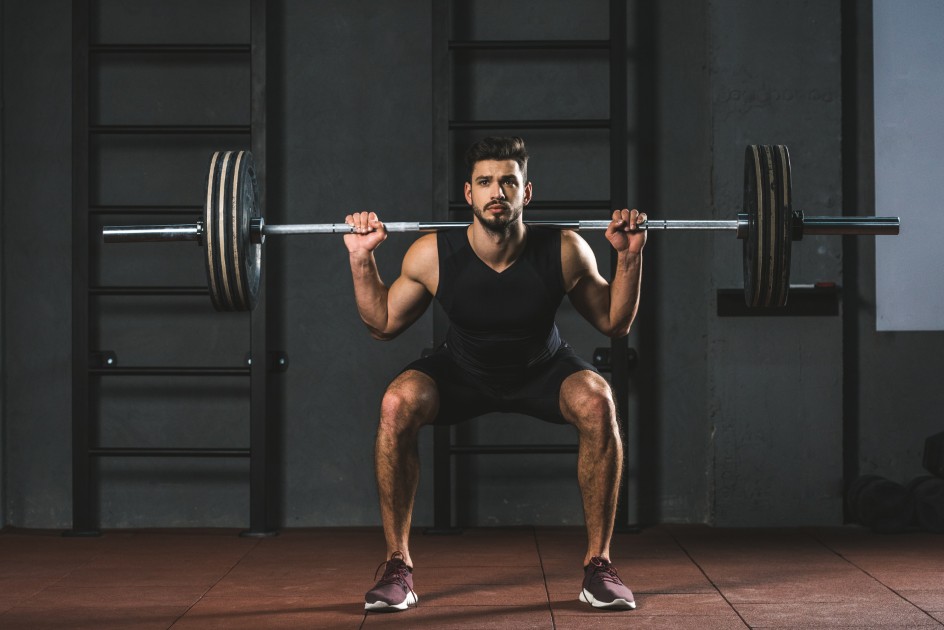
How to Squat (Anywhere): You can adjust squats to your environment. At the gym, a barbell back squat is ideal for maximal strength. If you’re at home or new to squatting, start with bodyweight squats or hold a dumbbell at your chest (goblet squat). Focus on sitting your hips back, keeping your chest up, and hitting roughly parallel depth with your thighs. Mastering bodyweight form is highly recommended before piling on weight. As you progress, you can add weight (barbells, dumbbells, kettlebells) to keep gaining strength. Squats can be done for moderate reps (e.g. 5–12) to build strength and muscle. Pay attention to form – your knees should track over your toes and your heels stay planted. Over time, a strong squat will translate into stronger, more resilient legs and core that serve you in every aspect of life.
2. Deadlifts – The Ultimate Total-Body Builder for Posterior Chain Strength
If the squat is king, the deadlift might be the queen. Deadlifts are a simple yet tremendously effective exercise: you lift a weight off the ground – nothing fancy, but the benefits are profound. In terms of pure strength gains, there are few substitutes for deadlifts. Its simplicity and functional nature make the deadlift a priority in any minimalist routine nsca.com. Why? Deadlifting engages almost every major muscle group in your body, with emphasis on the posterior chain (the back side of your body: hamstrings, glutes, lower back, upper back). It’s a textbook example of a compound movement that forces your body to work as one unit.
Why Deadlifts Deliver: The deadlift’s benefits range from building muscle and bone density to improving real-world strength. The heavy loads involved stimulate your muscle fibers to grow and get stronger, and even help improve bone density (making your bones stronger and more resistant to injury). Deadlifts also train the motion of safe bending and lifting, which is crucial for protecting your low back in daily life. In fact, properly performed deadlifts can reduce low back pain by strengthening the supporting musculature nsca.com (it sounds counterintuitive, but studies have shown improvements in back function when people rehab with deadlifts under guidance).
One of the deadlift’s greatest advantages is how many muscles it recruits simultaneously. As strength coaches like to say, “the deadlift works everything you can see in the mirror – and everything you can’t.” Your legs, hips, back, core, and even arms (grip and forearms) all pitch in. This makes it a time-efficient powerhouse for total-body strength. Few exercises activate the trunk (core stabilizers) as much as the deadlift, because you must brace your midsection to lift safely. Engaging so many muscles at once triggers a strong hormonal and neuromuscular response – in plain terms, it forces your body to adapt and get stronger everywhere. As researchers put it, the deadlift’s coordinated, full-body effort “engages a large number of muscle fibers simultaneously,” driving major strength adaptations.
How to Deadlift Safely: Like squats, deadlifts can be done with minimal gear. Ideally, use a barbell for conventional or trap-bar deadlifts. Stand with the bar over mid-foot, grip it, keep your back flat and core tight, and push the floor away as you stand up with the weight. Maintain control and avoid jerking the bar. Focus on using your hips and legs to lift while keeping your spine neutral. If you don’t have a barbell, heavy dumbbells or kettlebells can work (you can do suitcase deadlifts or sumo stance with a kettlebell). Start light to hone your form. Done correctly, deadlifts will greatly increase your real-world strength – carrying groceries, moving furniture, or picking up your child becomes much easier when you’ve trained the deadlift. As one review concluded, the positive changes in bone, muscle, metabolism, and even reduced back pain emphasize the importance of the deadlift in a training plan. It’s truly a one-stop shop for building a stronger you.
3. Bench Press / Push-Up – The Classic Push for Chest, Shoulders, and Arms
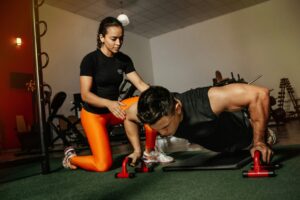
No strength routine would be complete without a pressing movement for the upper body. The bench press is the go-to barbell lift for building the chest, shoulders, and triceps, whereas the humble push-up is its bodyweight counterpart. Both exercises are fundamentally similar motions – you’re pushing something away from your chest – and both are highly effective. In fact, push-ups and bench presses alike strengthen your chest, arm, and shoulder muscles goodrx.com . The main difference is that push-ups use your bodyweight and also engage your core, while bench pressing allows you to add external weight for more load.
Why Pressing Matters: Bench presses (or push-ups) develop the pushing strength needed for many daily tasks and athletic endeavors – from pushing a heavy door open to throwing a punch or swinging a racket. They primarily target the pectoral muscles (chest), anterior deltoids (front shoulders), and triceps. These exercises also recruit stabilizer muscles in your shoulders and core. A big bonus for push-ups is core activation: you essentially hold a plank while doing the movement, which trains your abs and lower back to stabilize (making push-ups a compound move that hits the core, too). Experts often suggest beginners start with push-ups to build a base of upper-body and core strength using just body weight. As you get stronger, you can progress to weighted moves like the bench press to continue making gains in muscle size and strength goodrx.com.
For busy individuals or those without gym access, push-ups are a fantastic do-anywhere exercise. You can modify them to be easier (incline push-ups against a table or kneeling push-ups) or harder (decline feet, add a weight plate or resistance band). For athletes and advanced lifters craving maximum strength, the bench press allows you to incrementally load weight and overload the muscles more than bodyweight alone – making it ideal for building pure strength and power. Both movements complement each other: a strong push-up foundation often carries over to better bench press form and stability.
How to Perform Them: For push-ups, assume a plank position with hands slightly wider than shoulder-width. Keep your body in a straight line from head to heels (no sagging hips). Lower yourself until your chest is just above the floor, then press back up. Aim for multiple sets of as many good-form reps as you can do. For bench presses, lie on a bench, plant your feet, arch your back slightly, and grip the bar with your hands a bit wider than shoulder-width. Lower the bar under control to mid-chest level, then press it up until arms are extended. Start with a weight you can handle for 5–8 reps. Always prioritize form over ego lifts – control the weight and avoid bouncing it off your chest. Over time, these pushing exercises will build a strong chest and shoulders, and you’ll notice improvements in any activities that involve pushing or pressing.
Pro Tip: If you have access to a gym, you can alternate between bench press and push-ups to get the best of both worlds. For example, do barbell or dumbbell bench presses on one day, and on another day do higher-rep push-ups (or weighted push-ups) to failure. This combination builds both maximal strength and muscular endurance. For beginners, mastering push-ups first will make the transition to bench press much smoother (and safer).
4. Overhead Press – Strengthen Your Shoulders and Core in One Lift
The standing overhead press (also known as the shoulder press or military press) is another fundamental lift that earns a spot in our elite six exercises. Where the bench press works the horizontal pushing plane, the overhead press trains the vertical push movement. You simply press a weight from your shoulders straight up over your head. This motion builds formidable shoulder strength and stability, and, importantly, it engages your core and upper back to a high degree as you stabilize the weight overhead.
Why Overhead Press? Think of all the everyday scenarios and sports moves that involve putting something over your head – placing a box on a high shelf, lifting a suitcase into an overhead bin, hoisting a child onto your shoulders, throwing a ball or line-out in rugby, etc. The overhead press develops the strength needed for those tasks, making it extremely functional. It primarily targets the deltoids (shoulder muscles) and triceps, but it doesn’t stop there. A proper standing press forces you to brace your entire midsection to prevent arching, which means your abs, obliques, and lower back get a workout too. In fact, the overhead press is noted for improving core strength, balance, and stability while it builds your shoulders and arms gymshark.com. It also hits the upper back (traps) to some extent as you lock out the weight overhead.
Another benefit: Overhead pressing has carryover to other exercises. Strength gained here can assist your bench press and even Olympic lifts like the jerk or snatch, since you’ve trained a strong lockout and shoulder control. It’s a compound movement that requires coordination through multiple joints (shoulders, elbows, even ankles and knees as you stabilize), and this builds not just strength but also athleticism. Including a vertical press ensures your pushing strength is well-rounded (not just front-focused from benching). It can also contribute to healthier shoulders; many find that working the shoulder muscles in this full range overhead improves shoulder mobility and postural muscles, counteracting the slouch that comes from too much desk sitting.
How to Overhead Press (Options): The classic version is the standing barbell press. Start with the bar at shoulder height (rack or clean it up), grip slightly wider than shoulder-width, elbows under your hands. Squeeze your glutes and brace your core (imagine doing a standing plank). Press the bar upward in a straight line, moving your head slightly back then forward under the bar as it passes your face. Lock out with the bar over your mid-foot, then lower under control. Keep reps moderate (5–10) and focus on form – no excessive leaning or using your legs (that turns it into a push-press, which is a different exercise). If you’re new, practice with just the bar or light dumbbells to nail the technique. You can also perform seated presses or use dumbbells/kettlebells if a barbell isn’t available. Dumbbell shoulder presses (seated or standing) are excellent alternatives that allow a bit more freedom of movement. Key tip: keep your core engaged and tight through each rep – this prevents back strain and maximizes shoulder focus.
Over time, the overhead press will reward you with strong, capped shoulders and improved core stability. You might notice daily tasks feeling easier and your posture improves. As one fitness coach quipped, “If you want to lift big in life, practice lifting overhead.” In short, don’t neglect the vertical push – it’s a staple for a truly strong upper body.
5. Pull-Ups – The Ultimate Test of Pulling Strength (Back, Biceps, and More)
Pull-ups are a benchmark of upper-body strength for a reason: they are tough, but incredibly effective. There’s something raw and empowering about hoisting your body up to a bar. This single exercise works a huge number of muscles in one fluid motion, making it the go-to pull movement in our list of six. If you can’t do a full pull-up yet, don’t worry – variations like assisted pull-ups or lat pull-downs will get you there. The goal is the same: building a powerful back and grip.
Muscles and Benefits: Pull-ups primarily target the latissimus dorsi (the broad back muscles that give you that “V” shape) and also hit the traps, rhomboids, and rear shoulders – basically all the major upper-back muscles. As you pull, you’re also heavily engaging your biceps and forearms (anytime you’re gripping and curling your arms, those come into play). Additionally, your core works to stabilize your body from swinging, meaning pull-ups can contribute to abdominal strength as well. In short, a correctly executed pull-up gives you a formidable upper-body workout, “targeting muscles from the arms to the core and back,” as one summary noted goodrx.com.
One often overlooked benefit of pull-ups is the development of grip strength. Holding onto a bar with your full bodyweight is no small feat for your hands and forearms. Regularly doing pull-ups (or variations like dead hangs and chin-ups) will significantly improve your grip. This carries over to everyday life – think opening stubborn jars or carrying shopping bags – and even correlates with overall health. In fact, studies suggest grip strength can be an indicator of longevity and vitality. So building a bone-crushing grip via pull-ups is a nice side effect.
Pull-ups also contribute to better posture. By strengthening the upper back and pulling your shoulder blades down and back, they help counteract the forward slouch many of us develop from sitting. Strong back muscles make it easier to keep your shoulders back and spine neutral in daily activities goodrx.com. Plus, there’s the confidence boost: finally nailing that first unassisted pull-up is a huge win for anyone new to strength training, and each extra rep feels extremely rewarding.
Getting Started (and Advanced): If you’re new to pull-ups, start with assistance. You can use an assisted pull-up machine, loop a resistance band over the bar for help, or do negative reps (jump up to chin over bar, then lower slowly). Chin-ups (palms facing you) are slightly easier and also great for building up strength. Aim to practice hanging from the bar to improve your grip and get comfortable. If you’re already able to do some pull-ups, focus on quality over quantity: squeeze your shoulder blades down and together as you pull, get your chin over the bar, then lower all the way until your arms are straight (no half-reps!). Work in sets of 3–8 reps, adding reps as you get stronger.
For home workouts, a simple doorway pull-up bar is a worthy investment for this exercise. If pull-ups are too challenging initially, substitute inverted rows (bodyweight rows using a bar or rings at waist height) – they work similar muscles from a different angle. As you progress, you can make pull-ups harder by adding weight (wearing a dip belt or weighted vest) or by using tougher variations (like wide-grip pull-ups or cliffhanger pull-ups). No matter how you do them, pull-ups will forge a strong back and arms. They are the pulling counterpart to the push-up/press – together, those ensure balance in your upper body strength.
6. Plank (Isometric Core Hold) – The Core Strengthener that Ties Everything Together
Last but absolutely not least is the plank – a simple isometric exercise that yields big benefits. You might wonder, why include a plank instead of another big lift like a row or lunge? The reason is that a strong core is the foundation for all other movements, and the plank is one of the most effective and accessible ways to build core strength and stability. It’s the glue that links your upper and lower body in nearly every exercise and everyday movement. A weak core is often the hidden culprit behind poor lifts, back pain, or even shoulder and knee issues. So, dedicating one of our six slots to an isometric core exercise is a smart investment in your overall strength.
Why Plank? The plank engages all layers of your core musculature in one static hold – your rectus abdominis (six-pack muscles), transverse abdominis (deep core stabilizers), obliques (sides), and the erector spinae (lower back) all fire to keep your body rigid. Unlike crunches or sit-ups that isolate the abs and involve repetitive spinal flexion (which can strain your neck or back), the plank works the core isometrically, meaning the muscles tighten without changing length or moving joints mayoclinic.org. This has a couple of advantages: it trains your core the way it’s used in real life (as a stabilizer) and it spares your spine unnecessary stress. As one Harvard physical therapist notes, a plank “activates all the core muscles at once” without the extra movements that can cause injury health.harvard.edu. In essence, planks teach your core to do its primary job – stabilize your spine and transfer force between your upper and lower body – very effectively.
A strong core built from planks leads to better balance, posture, and injury resilience. Your core is your body’s pillar; when it’s solid, you’ll stand taller and reduce your risk of back pain. In fact, weak core muscles are often linked to lower back pain and poor posture, whereas improving core stability can alleviate those issues. Even knee and hip problems can sometimes trace back to an unstable core. That’s why planks (and core work in general) are commonly prescribed to rehab patients and athletes alike – they enhance stabilization of the spine and pelvis. Planks can also be done anywhere, anytime, since they require no equipment – perfect for busy folks who want to sneak in a quick exercise at home or even in the office.
How to Plank Properly: A standard forearm plank is a great starting point. Lie face down, then prop yourself up on your forearms and toes. Your elbows should be under your shoulders, forearms on the ground. Create a straight line from head to heels – no sagging hips and no piking up your butt. Imagine a board on your back: your head, upper back, and hips should all touch it. Now tighten everything – squeeze your abs, glutes, and even your legs. Breathe steadily while holding this tension. Start with 20–30 second holds, focusing on form. As you get stronger, you can work up to 1–2 minute planks. (Fun fact: experts say there’s not much benefit to holding beyond two minutes health.harvard.edu – if you can do that, you’re ready to add difficulty rather than time.)
There are many plank variations to keep it challenging: side planks (to hit obliques), planks with alternating arm/leg lifts, or weighted planks. Even the basic high plank (top of a push-up position) is effective and slightly shifts emphasis to shoulders and triceps. Form is key – a sloppy plank (hips too low or high) won’t give the full benefit and could strain your back. If standard planks are too hard at first, do them with knees on the ground, or incline your upper body on a stable surface. Consistently training planks will result in a noticeably stronger midsection. You’ll likely find your other lifts improve too – a strong core means a solid base for squats, deadlifts, presses, and it helps prevent energy leaks in those big movements. Plus, you might say goodbye to that nagging lower back discomfort as your core becomes rock-solid.
Conclusion: Putting It All Together – Your Minimalist Strength Plan
Each of these six exercises is highly effective on its own; together, they form a comprehensive full-body training plan. The beauty of this minimalist approach is efficiency: you can get a phenomenal workout by focusing on just these movements. For example, a simple routine could be: Squat, Overhead Press, and Plank on Day 1, and Deadlift, Pull-Up, and Push-Ups on Day 2, done 2–3 times per week. In those short sessions, you’d hit every major muscle group and build real-world strength without wasting a minute.
By prioritizing the basics, you also reduce the mental load – no need to juggle 15 isolation exercises or complicated machines. Instead, you’ll be honing a few skills and progressively getting stronger at them. This can be incredibly motivating; you’ll clearly see your improvements (adding weight to the bar, squeezing out more reps, etc.). And rest assured, science backs this simplicity up: multi-joint compound exercises produce equal or greater gains compared to doing a bunch of single-joint moves pmc.ncbi.nlm.nih.gov. In other words, five bicep curl variations can’t compete with the overall stimulus of a good set of pull-ups or rows. By focusing on high-return exercises, you’re not leaving any results on the table.
Stay consistent and push yourself to gradually increase the challenge (a bit more weight, an extra rep, a longer plank hold). Over time, these six exercises will develop your strength, muscle tone, and stability across your entire body. You’ll feel it in everyday life – carrying groceries or sprinting for the bus will seem easier, your posture will improve, and you might even prevent injuries thanks to balanced muscle development and core strength.
Finally, keep the engagement and enjoyment high: track your personal records, celebrate small wins (like your first unassisted pull-up or a new squat max), and mix up variations if needed to ward off boredom. The simplicity of this program leaves room to focus on form and really master each movement, which in itself is very rewarding. Remember, when it comes to strength training, more is not always better – better is better. By embracing this contrarian simplicity and sticking to these proven exercises, you’ll be on the fast track to a stronger, fitter you. Now it’s your turn: ditch the fluff, grab those six moves, and get to work – your future self will thank you!
Ready to get started? In your next workout, try focusing only on the six exercises above. Commit to this minimalist routine for a few weeks and monitor your progress. You might be surprised at how much stronger (and more energized) you feel. Share your experience or any questions in the comments – and welcome to the simplicity revolution in strength training!