

AG Magazine • Fitness & Performance
Eight weeks of disciplined training, and the scale hasn’t moved. Did it work?
It may have worked better than you think. A 2026 NASM explainer points out that losing five pounds of fat while gaining five pounds of muscle leaves your weight exactly where it started. That quiet swap is called body recomposition, or recomp, and the engine behind it is smart strength training and conditioning, not a crash diet.
Get more like this — weekly.
One email a week. Research-backed wellness, translated into things you can actually do. No spam.
Can you really lose fat and build muscle at the same time? Who recomps fastest, and who needs more patience? Below you’ll find the evidence, a practical weekly structure, and the fuel and recovery habits that make recomp stick, whether you compete professionally or have been lifting for decades. Every claim is linked to its source, so you can check the evidence yourself. Think of it as sculpture: you’re not just shrinking the block, you’re reshaping it. By the end, you’ll know exactly what to change in your next training week.
What Is Body Recomposition?
Body recomposition is the process of losing body fat while building or maintaining muscle at the same time, so your shape and strength improve even if your weight barely changes. It depends on resistance training, adequate protein, a small calorie gap or maintenance intake, and consistent sleep. Expect results over weeks to months, not days.
Cleveland Clinic’s 2024 overview frames recomp as a healthy lifestyle approach that many people can use, not a niche practice reserved for elite athletes. It also sets honest expectations: there’s no quick fix, and results take time. Strength training and conditioning give that time something to build on.
Can you lose fat and build muscle at the same time?
Yes, with a caveat about pace. Cleveland Clinic notes that well-trained people can lose fat and gain muscle simultaneously, though the approach isn’t limited to them. Newer lifters have more room to improve, and veterans win through precision. The more training experience you carry, the more exact your plan has to be.
Why Dieting Alone Often Costs You Muscle
Cut calories without lifting, and your body doesn’t take only fat. Harvard Health (January 2026) reports that roughly 25% of the weight you lose can come from muscle, and more when weight drops quickly. That’s the hidden cost of chasing a lower number.
A 2017 Advances in Nutrition review, a foundational paper on this question, concluded that resistance-type exercise is an effective way to attenuate, or even prevent, the muscle loss that comes with weight loss. Higher protein helped preserve lean mass, but it did not improve strength on its own.
So here’s the question worth asking: do you want to be lighter, or do you want to be stronger, leaner, and harder to injure? Strength training and conditioning protect the second option.
Build Your Strength Training and Conditioning Week
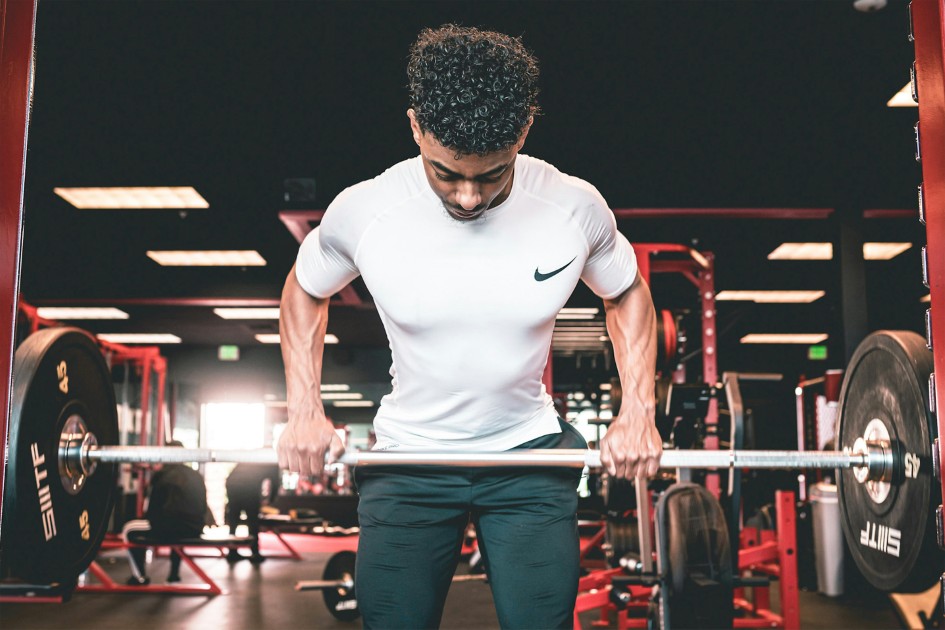
Lifting tells your body to keep and build muscle. Conditioning supports your heart, your recovery, and your energy output. Strength training and conditioning form one system, and the American College of Sports Medicine’s April 2026 position stand, built on an umbrella review of more than 137 studies and 30,000 participants, is the current anchor for how healthy adults should program resistance training.
How many days a week should you lift to recomp?
Cleveland Clinic recommends lifting for the major muscle groups two to three times a week, using about three sets of eight to twelve repetitions and gradually adding weight, a principle known as progressive overload. Harvard Health pairs at least two weekly resistance sessions with 150 minutes of moderate aerobic activity. Here’s how to put that into practice:
- Lift two to three days a week. Anchor each session in a squat, a hinge, a press, and a row.
- Progress something weekly. Add a little load, a rep, or a set. That’s progressive overload, and it’s the signal your muscle responds to.
- Schedule your conditioning. Aim for 150 minutes of moderate aerobic work per week, split however suits your life.
- Walk on off days. Easy movement aids recovery without taxing your next lift.
Does cardio kill your gains?
Not in the way you’ve heard, because strength training and conditioning aren’t rivals. An updated systematic review and meta-analysis in Sports Medicine found that combining aerobic and strength training does not compromise muscle growth or maximal strength. Explosive strength gains, however, may be blunted, especially when both are trained in the same session.
If you sprint, jump, or lift explosively, give power work its own session where you can. For everyone else chasing body composition, relax: you don’t have to choose between lifting and conditioning.
Is recomp realistic after 65?
Yes, with smart scaling. WHO’s 2020 announcement of its physical activity guidelines advises older adults to add muscle-strengthening and balance work to help prevent falls and improve health. Strength training and conditioning stay valuable at every age, and the same recomp principles apply: lift, eat enough protein, sleep well, and match the load to your ability, ideally with a qualified coach.
Fuel and Recover Like You Mean It
Your strength training and conditioning only pay off if your fuel and recovery match the work. Two levers matter most: how much protein you eat, and how well you sleep.
How much protein do you need for body recomposition?
A British Journal of Sports Medicine meta-analysis of 49 trials and 1,863 participants found that once total protein intake passed about 1.6 grams per kilogram of body weight per day, extra protein produced no further gains in fat-free mass. That’s roughly 0.7 grams per pound. The confidence interval was wide, from 1.03 to 2.20 grams per kilogram, so treat 1.6 as a sensible target rather than a magic number.
More isn’t automatically better. Harvard Health notes that older adults who strength train may benefit from 1 to 1.6 grams per kilogram daily, while intakes of 2 grams per kilogram or more may carry health risks. If you have a kidney condition or any other medical issue, ask your clinician before changing your protein intake.
Why does sleep matter for recomp?
Sleep shapes appetite, and appetite shapes your calorie gap. In a 2022 trial covered by Harvard Health, 80 overweight adults who usually slept under 6.5 hours were coached toward longer sleep. They slept more than an hour longer per night and ate about 270 fewer calories a day. The study tracked appetite and weight, not muscle, so treat it as a clue about why recovery habits matter.
If you’re also trying to lose weight, go slowly. Harvard Health advises losing one to two pounds a week, since rapid loss accelerates muscle breakdown.
⚡ PRO TIP
Judge your recomp by what the scale can’t see. Every four weeks, record your waist measurement, take a front and side photo, and log your top set on three key lifts. If your waist is shrinking or your strength is rising while your weight holds steady, your strength training and conditioning plan is working.
Lift With Intent. Measure What Matters.
Strength training and conditioning aren’t about punishing your body into a smaller shape. They’re about building a body that performs, recovers, and lasts, and the research says you can do that while losing fat.
Remember that stalled scale? It may have been progress in disguise. Keep lifting, keep fueling, keep sleeping, and let the tape measure and the barbell tell you the truth.
This week, put three strength sessions on your calendar and write down your starting numbers for one squat, one press, and one row. As always, check with your clinician before starting a new program or changing your diet, especially if you have a medical condition.



No one seems to have shared their thoughts on this topic yet
Leave a comment so your voice will be heard first.