
AG Magazine • Fitness & Performance
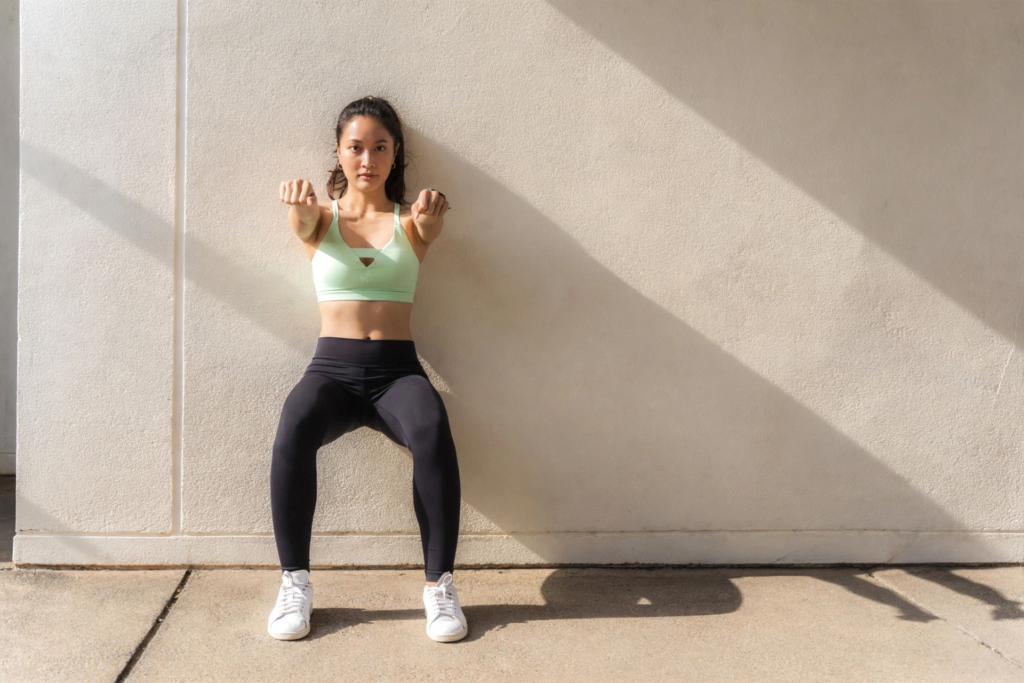
A wall, your legs, and a few minutes of holding still. That is the entire setup for the isometric wall squat, and it keeps showing up in blood-pressure research. A 2023 British Journal of Sports Medicine analysis of 270 randomized trials ranked isometrics for blood pressure first among exercise types, and a registered trial protocol is designed to test whether that ranking survives tougher measurement.
Here is the tension. That same analysis urges caution, because only a small slice of its isometric trials used the wall squat, and newer studies are still working out the basics: how much, how long, and for whom. Curious yet? You should be, and you should also be careful.
This guide separates what the research shows from what it cannot yet say. Whether you compete for a living or you simply want to protect your heart, you will leave knowing what a wall hold can plausibly do, what remains unproven, and how to test it with your clinician.
Do Isometrics for Blood Pressure Actually Work?
In the trials we have, yes. A 2024 Sports Medicine review assessed 28 randomized trials and found isometric training lowered resting pressure by about 8 mmHg systolic and nearly 4 mmHg diastolic, with moderate certainty. Moderate is not settled, as the sections below show.
How Big Is the Effect Compared With Cardio and Weights?
A UK team from Canterbury Christ Church University and the University of Leicester put numbers on it in a 2023 network meta-analysis. Isometric training lowered systolic and diastolic pressure by about 8.2 and 4.0 mmHg, versus roughly 4.5 and 2.5 for aerobic training, 4.6 and 3.0 for dynamic resistance training, and 4.1 and 2.5 for high-intensity intervals. Within isometrics, the wall squat ranked highest for systolic pressure, ahead of leg extension and isometric handgrip (7.1 mmHg), while running led for diastolic.
Notice the quiet headline: every major exercise mode lowered pressure. The best way to lower blood pressure with exercise is still the one you will repeat, so treat isometrics for blood pressure as an addition to your training, not a replacement for it.
Do Wall Sits Lower Blood Pressure More Than Handgrip?
Possibly, but the head-to-head data on wall sits are small. In a 2023 Journal of Clinical Hypertension trial of 77 unmedicated adults with hypertension, twelve weeks of training three times a week lowered systolic pressure by 12.9 mmHg with wall squats and 11.2 mmHg with isometric handgrip, against almost no change in controls. Diastolic changes were not significant. After 12 more weeks at one session weekly, the wall squat group sat 3.8 mmHg lower than the handgrip group, a promising signal from one trial rather than a verdict.
What the Evidence Cannot Yet Tell You
Isometrics for blood pressure look strong on paper, but strong on paper is not the same as proven in practice. Four gaps matter most: how few wall squat trials exist, how certain the evidence really is, how real-world trials behave, and whether ambulatory monitoring agrees.
Why Is the Wall Squat Still Unproven?
Start with the numbers behind the headline. Of 24 isometric effect sizes in the 2023 analysis, only four involved the wall squat, and the network contained no head-to-head comparison between isometric modes. The authors also reported significant heterogeneity across most analyses and signs of publication bias in the isometric diastolic data.
Certainty is the next limit. The 2024 review’s author panel stopped at moderate certainty, citing unclear allocation concealment and a high risk of bias in roughly 30% of studies.
What Happened in a Real-World Trial?
A 2025 BMJ Open feasibility trial tested the isometric wall squat inside England’s National Health Service. It randomized 41 adults with unmedicated stage 1 hypertension, and 34% withdrew or were lost to follow-up. Systolic pressure fell more in the isometric group at every time point, yet the control group’s pressure fell too, and the between-group differences came with wide confidence intervals.
The study was never powered to detect a difference. Its job was to learn whether a bigger trial is workable, and the answer was a qualified yes: sessions were deliverable, 85% of completed sessions hit the target intensity, and the authors calculated that a full trial needs 542 participants.
Will Ambulatory Monitoring Confirm It?
That is the question behind a registered randomized trial of isometric exercise for hypertension (NCT06510998) whose protocol was published in 2026. It plans to enroll 390 adults and track pressure with 24-hour ambulatory monitoring, the reference standard, because only one earlier wall squat trial, with 48 participants over four weeks, used it. Until results arrive, treat any claim that a wall hold fixes blood pressure as premature.
How to Try Isometrics for Blood Pressure Safely
You do not need a gym to test isometrics for blood pressure, only a wall and a plan. Anyone hoping to lower blood pressure with exercise should treat safety as step one, and the research gives you clear places to start.
Are Isometric Exercises Safe If You Have High Blood Pressure?
Holding a static contraction makes pressure spike while you hold it. A foundational 2018 laboratory study of 26 unmedicated men with above-optimal blood pressure tracked it beat by beat during four 2-minute wall squats. Peak systolic pressure averaged about 171 mmHg, diastolic pressure topped 115 mmHg in six participants, and no one reported adverse effects.
Pressure climbed with each bout, and the authors suggested an individualized prescription for people with poorly controlled pressure, such as fewer bouts or a shallower squat, plus a supervised first session. Because the group was small, all male, and screened for heart problems, the study cannot tell you what happens with heart disease or very high readings.
What Does a Cautious Test Look Like?
Trials typically use four 2-minute holds with two minutes of rest, three sessions a week. Treat that as a map, not a prescription, and work through these steps.
- Get clearance first. Anyone considering isometric exercise for hypertension should ask a clinician before starting. The 2025 feasibility trial excluded people with diabetes, ischaemic heart disease, arrhythmia, and stroke, among other conditions, so its results do not cover them.
- Start easy and build. Begin with a shallower squat and fewer holds, as the 2018 authors suggested, and progress only if your clinician agrees.
- Keep breathing. Hold a steady, unforced breath. Bracing so hard that you stop breathing is not the goal.
- Judge at twelve weeks. How long does isometric training take to lower blood pressure? In the 2023 trial above, the main comparison came after twelve weeks of three sessions a week, so give it a full block before you decide.
- Keep your cardio. Nothing here suggests swapping out walking, running, or strength work. Add wall holds around them.
⚡ PRO TIP
Before your first hold, log seated home readings for a week: rest quietly, measure at the same time each day, and write every number down. Keep logging through your first twelve weeks. Your own trend, not a headline or a single gym-day reading, is what you and your clinician can actually act on.
Hold the Wall. Question the Headline.
The honest answer is this: isometrics for blood pressure are promising, plausible, and still being proven. Pooled trials favor them, the wall squat looks especially strong, and the tests that matter most, with ambulatory monitoring and larger samples, are still underway. That is no reason to dismiss them. It is a reason to run them as a careful experiment rather than adopt them as a cure.
What would you rather trust, a headline or your own numbers? This week, book a blood-pressure check, log seven days of seated home readings, and bring them to your clinician before your first wall hold. You will have a baseline, a green light, and a clear way to learn whether isometrics for blood pressure work for you.