AG Magazine • Fitness & Performance
You’ve heard the story: peak in your twenties, then a slow slide downhill. But the aging brain doesn’t read like a simple loss column. Some abilities fall. Others keep climbing for decades. And a growing line of research asks whether the older brain is tuned for a different job entirely, not just losing ground.
That question matters whether you’re a pro athlete planning life after competition or a lifelong lifter who wants to stay sharp into your eighties. If the older brain trades raw speed for judgment, you can train for the trade instead of mourning it. What if you’re not slowing down, but specializing?
Here’s what the evidence shows, where it’s still mixed, and exactly how to train for the brain you’re building. This is about healthy cognitive aging, not dementia, and every claim links to its source so you can check the work.
What Does the Aging Brain Actually Lose and Gain?
The healthy aging brain tends to lose some on-the-spot reasoning, while keeping or growing accumulated knowledge, emotional regulation and judgment. These gains are not guaranteed, and they taper late in life. The pattern looks more like a reshuffling of strengths than a blanket decline, and individual results vary widely.
Does your brain get worse as you age?
Partly, yes. In a 2022 Journal of Neuroscience sample of adults ages 18 to 88, fluid intelligence, the measure of on-the-spot reasoning, fell steadily with age. But that is one column of the ledger.
Another column keeps rising. A foundational 2014 analysis funded by the National Institute on Aging tracked word knowledge in more than 4,700 adults and found that scores rose through early adulthood, held up well into midlife, and began to decline around age 65. Think of a library that keeps adding books for decades before the shelves stop growing.
Why does that matter for brain health? Because it reframes the question. Instead of asking how much you’re losing, you can ask which abilities you’re still building, and which training habits protect them. That shift matters for every stage of cognitive aging, from a 25-year-old rookie to a 75-year-old masters competitor.
Why do older adults know more but recall slower?
Access is the catch. The same paper points to earlier research showing that tip-of-the-tongue moments grow more common across adulthood, even while vocabulary is still climbing. More books, slower librarian. That tradeoff opens the door to a bigger idea.
Is the Older Brain Built for Something Else?
Cognitive scientists describe two modes of thinking. Exploring means sampling new options. Exploiting means leaning on what you already know. Compared with younger adults, older adults often lean toward the second.
In a 2019 study in Psychology and Aging, older adults foraged somewhat less efficiently than younger adults in a computer search task because they stayed longer in one patch instead of moving on. Efficiency dipped. But look at what that is: a preference for working the patch you know.
It’s one task in one lab. Treat “built for something else” as a strong hypothesis, not a verdict, and expect the picture to keep changing as more studies arrive.
Even so, the idea is useful. It suggests the older brain isn’t failing at the young brain’s job so much as leaning toward a different one: using stored knowledge efficiently rather than hunting for novelty. Training that respects that lean, while still nudging you to explore, fits the aging brain better than a plan built for a 22-year-old.
For an athlete, it could look like a veteran who reads the game two plays early but resists a new system. Same trait, two outcomes. Which mode is your next session asking for?
Why Does Emotional Control Improve With Age?
Here’s the part that surprises people. A foundational 2011 review in Gerontology notes that emotion regulation stays stable and in some ways improves across adulthood even as other abilities decline. The authors argue that the amygdala, your brain’s alarm system, is structurally preserved in older adults, so the calmer outlook is more likely prefrontal control than a dulled response.
Newer data point the same direction. In a 2022 Journal of Neuroscience study of 249 adults, positive reactivity and positive regulation rose with age even after accounting for lower fluid intelligence. One caution: the effect depended on how emotion was scored, so hold it loosely.
If it holds, steadier emotional control isn’t a consolation prize. It may be a performance asset, especially under pressure.
Can Exercise Keep an Older Brain Sharp?
Maybe, and the research is honest about its limits. A foundational 2014 systematic review of 25 randomized trials found only a few clear wins: resistance training beat stretching on reasoning, and Tai Chi beat no exercise on attention and processing speed. The remaining 26 comparisons showed no significant differences, and differences in programs and adherence muddy the picture.
A 2023 meta-analysis was more upbeat, reporting that aerobic or resistance training improved scores on several cognitive tests and recommending at least moderate-intensity aerobic work plus resistance exercise. Its samples were small, so treat the size of the effect with caution.
Why might exercise help? A foundational 2008 review proposed that it’s not isolated physical activity but activity paired with cognitive challenge that benefits the brain, an idea built largely on animal research. That’s a hypothesis, not a promise.
How do you train for the job your brain is doing?
Use the evidence where it’s strongest and stay curious where it isn’t:
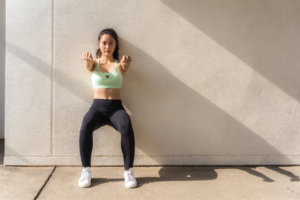
- Pair resistance training with moderate aerobic work. Both showed benefits in the 2023 analysis, and strength work carried the reasoning signal in the 2014 review.
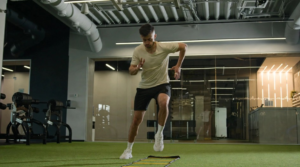
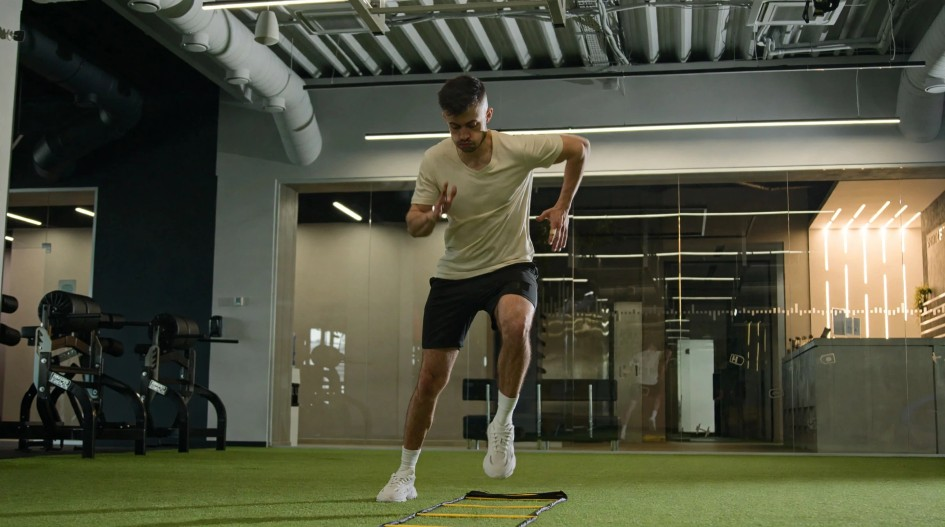
- Pick sessions that demand skill learning. Tai Chi, dance, a new sport or technical drills add cognitive challenge to the sweat.
- Exploit deliberately, explore on schedule. Trust experience when stakes are high, and book one unfamiliar task each week so exploration never fades.
- Give recall a runway. Use cues, notes and a slower pace when you need a name or number. The library is intact; the librarian just needs a beat.
This research covers healthy aging. If you have memory concerns or a medical condition, talk with your clinician before changing your training.
What does a week of brain-friendly training look like?
Here is one illustration, not a prescription. Two strength sessions that include a lift you’re still learning. Two moderate aerobic sessions, one of them outdoors on a route you haven’t run before. One skill-heavy session, such as Tai Chi, dance or a technical drill block.
The point is variety with effort. Each session gives your older brain something to work out, not just something to repeat. Adjust the load to your fitness level and your clinician’s guidance, and protect your recovery days, because a rested brain learns better than a tired one.
⚡ PRO TIP
Stack a skill on top of your workout. After your warm-up, spend ten minutes on something you can’t yet do well: a new movement pattern, a footwork sequence, an unfamiliar route. Keep it hard enough that you have to concentrate. The research behind this is a proposal, not a proven protocol, but the cost of trying it is ten minutes.
Train the Brain You Have. Not the One You Had.
The aging brain isn’t a rough draft of your twenty-something brain with pages missing. It’s a different instrument: richer in knowledge, steadier under pressure, and slower to retrieve. Whether you compete or simply want more good years of healthy aging and sharper brain health, the evidence supports a balanced plan: move hard, learn something new, and let experience do the heavy lifting where it excels.
The research isn’t finished, and that’s fine. You don’t need certainty to start. You need one change you can keep. This week, add one ten-minute skill challenge to your next workout, then note how your focus and recall feel afterward. Your older brain has a job. Give it better work.