
AG Magazine • Fitness & Performance
You stretch your back, foam-roll it, ice it, and book the massage — and the ache still creeps back by Wednesday. Here’s the twist most people miss: the problem often isn’t your back at all. It’s your hips.
If you train hard but sit for the rest of the day, the muscles at the front of your hips quietly shorten, and that stiffness can travel straight up into your spine. Building hip mobility for lower back pain is one of the most overlooked fixes in fitness — and one of the most teachable. This isn’t about chasing extreme flexibility or holding a stretch until your eyes water. It’s about restoring the range your hips were built to have, so your lower back stops doing a job it was never meant to do.
According to a Harvard Health Publishing guide, sitting for long stretches shortens and tightens the hip flexors, and because those muscles attach to the pelvis and lower back, that tension can feed into low back pain. Below, you’ll get the mechanism, the evidence, and a routine you can start today.
Why Your Back Pain Might Start at Your Hips
Your hip flexors — mainly the iliopsoas and rectus femoris — run from your spine and pelvis to the top of your thighs. Their job is to lift your knee toward your chest: the exact position you hold every time you sit. Spend eight, ten, twelve hours a day in a chair, and those muscles adapt by getting shorter and tighter. Runners and cyclists aren’t spared either, since both sports hammer the same hip-flexing pattern.
That tightness rarely stays local. Because tight hip flexors anchor to the pelvis and lumbar spine, they can tug your pelvis into a forward tilt and limit how far your leg travels behind you. Your body still needs that motion to walk, run, and squat — so it borrows the range from somewhere else. Usually, that somewhere is your lower back. So why does stretching your back never quite fix it? Because you’re treating the spot that’s compensating, not the joint that’s stuck.
Can tight hips really cause lower back pain?
Often, yes — at least indirectly. When your hip can’t fully extend, the lumbar spine and pelvis compensate with extra movement, and that repetitive borrowing piles stress onto the low back. A 2023 systematic review and meta-analysis in the Brazilian Journal of Physical Therapy describes exactly this lumbopelvic compensation, and found that hip-targeted strengthening and stretching reduced pain and disability in the short term — though the authors rated the overall certainty of the evidence as low and urged clinicians to assess the hip in anyone with back pain.
In plain terms: tight hips don’t doom your spine, but they’re a common, fixable contributor worth ruling out before you blame your back.
What the Research Says About Hip Mobility and Lower Back Pain
The honest answer is that the science is promising but still maturing. Several studies point the same direction: address the hips, and the back often follows — though the effects so far look modest and mostly short-term.
A 2025 study in the journal Diagnostics tested this directly. Among people with chronic low back pain whose hip extension was restricted, adding hip-focused exercises to a standard spine-stabilization program produced significantly greater improvements in disability scores and postural stability than stabilization work alone. The hips, in other words, weren’t a distraction from back rehab — they were part of it. That’s a meaningful clue if you’ve been chasing lower back pain relief without ever looking below the waist.
How long until hip mobility work eases back pain?
Give it a couple of weeks of consistent effort before you judge it. Cleveland Clinic physical therapists note that when your back hurts, resting and staying still tends to add stiffness, while gentle, regular movement helps loosen things up — and that meaningful change usually takes two weeks or more of sticking with the routine. Consistency, not intensity, is what moves the needle here.
The Hip Mobility Mistakes That Keep Your Back Tight
If you’ve stretched your back and hips before without lasting relief, you probably didn’t fail — you were likely doing the right thing in the wrong place. Two mistakes are almost universal.
First, people chase flexibility instead of control. Yanking a joint into a deeper range without the strength to own it can leave the area feeling loose but unstable, and your back will keep guarding. Hip extension mobility — the ability to drive your thigh behind you — matters far more than touching your toes.
Second, people only stretch where it hurts. The ache lives in your back, so that’s where the foam roller goes. But if the restriction is at your hips, working your lumbar muscles is treating the smoke, not the fire. Reframe the goal: you’re not trying to make your back more flexible — you’re trying to make your hips do their share again.
How To Improve Hip Mobility for Lower Back Pain
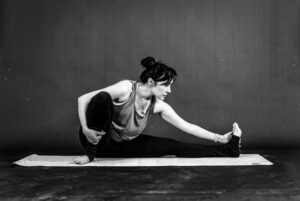
To improve hip mobility for lower back pain, stretch and strengthen the muscles around your hips a few times a week and break up long bouts of sitting with movement. Open the front of your hips first, then add light strength work so your hips can both move freely and support your spine.
A simple daily routine to free tight hips
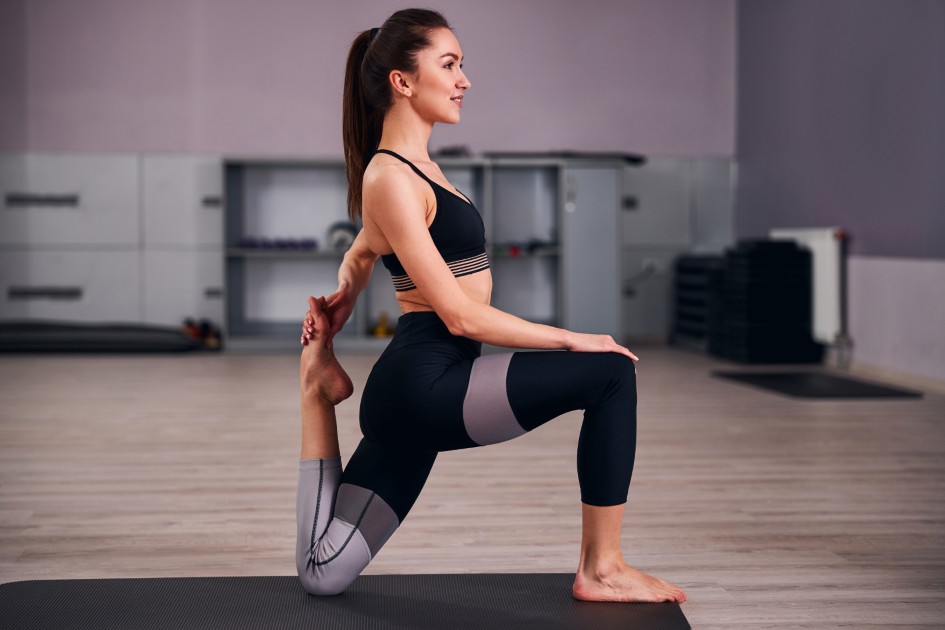
- Kneeling hip flexor stretch. Drop into a half-kneel, gently tuck your pelvis, and ease your hip forward until you feel a pull at the front of the back leg. Harvard Health Publishing suggests accumulating about 60 seconds total per side.
- Glute bridges. Lie on your back, knees bent, and drive your hips up by squeezing your glutes. This wakes up the muscles that stabilize your pelvis, so your hip flexors stop overworking.
- Figure-four stretch. Cross one ankle over the opposite knee and draw both legs toward your chest to open the outer hip and glutes.
- Hourly movement breaks. Stand, walk, or run through a few slow hip circles every 30 to 60 minutes so stiffness never gets a chance to set in.
⚡ PRO TIP
Don’t just stretch a tight hip — teach it to hold the new range. Right after your hip flexor stretch, do five slow glute bridges. The stretch creates room; the strength work tells your nervous system it’s safe to use that room, so the mobility actually sticks instead of snapping back by your next meeting.
Free Your Hips, Protect Your Back
Your lower back has probably been taking the blame for a problem that starts a little lower. The fix isn’t dramatic — it’s a few focused minutes most days, aimed at the joints that were built to move so your spine can do less of the heavy lifting.
Start small and start now: pick two moves from the routine above, do them today, and repeat them five days this week. Then notice how your back feels by next weekend. Building hip mobility for lower back pain is a long game, but it’s one of the highest-return habits you can add to your training and one of the simplest forms of lower back pain relief to test for yourself.
One caveat worth respecting: if your pain followed a fall, shoots down your leg, or comes with numbness or other warning signs, see a clinician before you stretch. For everyday stiffness, though, your hips are waiting. Free them, and give your back a break.