
Wand Pilates Workout: Strength and Balance at Any Age
Introduction: Feeling limited by traditional workouts or bulky gym equipment? A wand Pilates workout might be the answer. Pilates is an excellent choice for starting a safe, effective, and fun fitness routine – even if you’re not used to exercising aarp.org. It’s never too late to begin; Pilates can be done at any age and may help prevent falls and improve joint health. And it’s not just for seniors or beginners. If you’re a fitness enthusiast looking to level up your home routine or a rehab patient rebuilding strength, the Pilates wand (a lightweight bar with attached resistance bands) can inspire and challenge you. This simple tool brings the benefits of studio Pilates into your living room by mimicking reformer machine exercises. In other words, you can tone muscles, enhance flexibility, and boost balance without high-impact workouts or expensive equipment uclahealth.org. Whether you aim to sculpt your body, improve posture, or recover from an injury, a Pilates wand can be a valuable ally on your fitness journey.
What Is Wand Pilates?
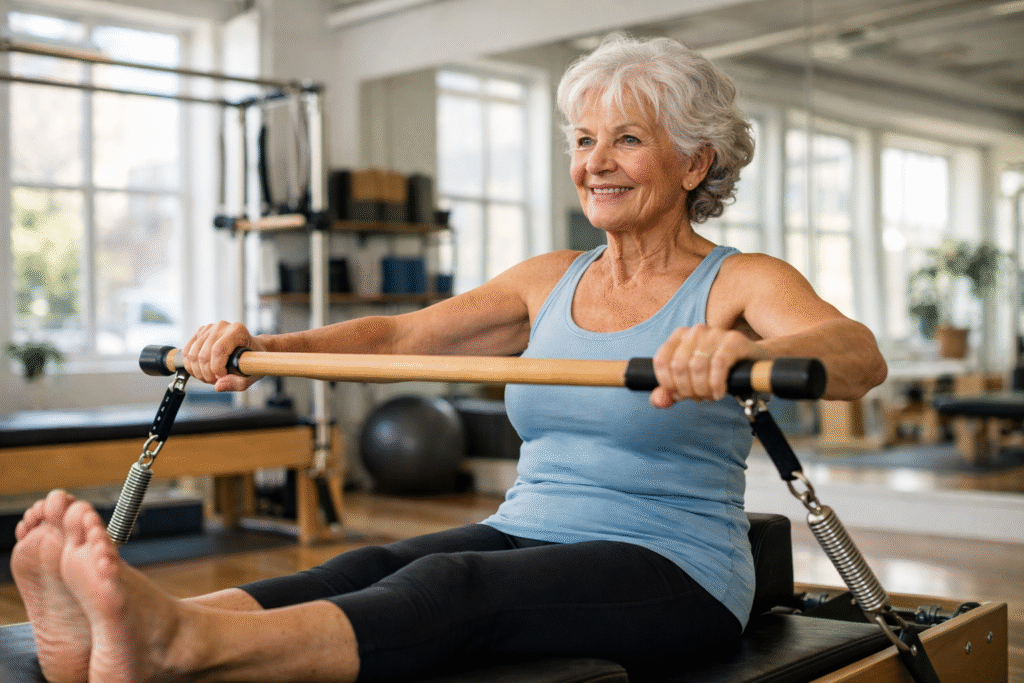
Wand Pilates refers to performing Pilates exercises using a Pilates wand (also called a Pilates bar or pole). This wand is a portable bar connected to two elastic resistance bands or springs. It’s essentially a miniature Pilates reformer: experts describe the Pilates bar as “a fantastic accessory that replicates reformer-based movements without the need for a reformer itself”. Joseph Pilates originally developed his exercise method in the 1920s for physical rehabilitation, using specialized apparatus to build strength with controlled resistance. The modern Pilates wand carries on that tradition by allowing you to perform controlled, low-impact movements with adjustable resistance at home, inevifit.com.
Classical vs. Contemporary: In classical Pilates (the traditional method), exercises follow a specific sequence and often use apparatus like the reformer or magic circle. The wand isn’t part of Joseph Pilates’ original equipment, but it aligns with his principles of control and core-centric movement. Contemporary Pilates, which adapts exercises to modern knowledge and individual needs, readily incorporates props like the Pilates bar for variety and rehab-friendly modifications. This means wand Pilates can fit into both a classical practice (by simulating apparatus exercises) and a contemporary routine (by adding creative resistance), bridging tradition and innovation in Pilates training.
Top Benefits of Wand Pilates Workouts
Using a Pilates wand can amplify your workout with full-body benefits while remaining gentle and accessible. Here are some key benefits, supported by experts and research:
- Full-Body Strength & Toning: Wand Pilates engages multiple muscle groups simultaneously. With the bar and bands, you’ll work your core, legs, arms, and back all at once. The added resistance helps build muscular endurance and tone lean muscle for a stronger, more balanced physique. For example, one study of older adults found four weeks of Pilates led to noticeable gains in core strength uclahealth.org.
- Low-Impact & Joint-Friendly: Pilates movements are controlled and easy on the joints, and the wand’s resistance bands provide smooth tension without jarring impact. This makes wand workouts ideal if you have arthritis, past injuries, or simply prefer gentle exercise. You can strengthen muscles without pounding on your knees or spine. In fact, Pilates is known to be safe and adaptable for all ages because it delivers results without high-impact stress.
- Improved Balance and Stability: Many wand exercises challenge your stability and engage your core, which can greatly improve your balance. Better balance is crucial for older adults to prevent falls. Research suggests Pilates may be more effective at improving dynamic balance (the balance you need while moving) than general exercise uclahealth.org. By strengthening your midsection and legs with the wand, you’ll gain a steadier stance and confidence in daily activities.
- Better Posture & Core Support: Pilates is famous for building a strong core and aligning the body. Using a wand adds resistance to classic core moves, further activating your abdominals and back muscles. Over time, this can improve your posture by strengthening the deep muscles that support your spine. Good posture not only makes you look and feel more youthful, but also can enhance breathing and reduce back pain. Pilates-based training has been linked to reduced back pain and even maintenance of bone density as we age.
- Rehabilitation & Flexibility: The wand is a great tool if you’re recovering from an injury or have limited mobility. Its resistance is adjustable to your fitness level – you can start light and gradually increase intensity as you get stronger. The controlled motions gently increase your range of motion and stretch tight muscles, improving your overall flexibility and joint mobility. Pilates experts note that whether you want to rehabilitate from injury or improve posture, the Pilates bar can help you reach those goals safely. It’s a mind-body approach that lets you rebuild strength without aggravating injuries, all while reducing pain and stiffness through movement joyfit.in.
5 Wand Pilates Exercises to Try
One of the best things about wand Pilates is the variety of exercises you can do. Here are five beginner-friendly wand exercises that highlight the versatility of this prop. These moves blend classical Pilates principles with the wand’s added resistance, giving you a taste of both tradition and modern flair:
- Pilates Bar Squat: Stand with feet hip-width apart, looping the band under your feet. Hold the bar at shoulder height. Inhale, then exhale as you squat down, keeping your back straight and core engaged. Push through your heels to rise. This exercise targets your legs, glutes, and core for lower-body strength and stability inevifit.com. Tip: Go as low as comfortable – even a shallow squat builds strength.
- Standing Leg Kicks: With the band secured to your feet and the bar held at chest level, shift weight to one leg. Kick one leg forward (or slightly back for a kickback), then return and switch sides. Move slowly and stay balanced. This move helps improve your balance, flexibility, and lower-body strength (working the thighs and glutes). Pro Tip: If balance is tricky, perform the kick next to a wall or chair for light support until your stability improves.
- Bicep Curls with Bar: Stand on the center of the bands and hold the bar with an underhand grip (palms up). Keeping elbows tucked at your sides, curl the bar up toward your chest, then resist it back down. This classic curl strengthens your arms, specifically building the bicep muscles for toned upper arms. You’ll also engage your core to stay stable. Focus on control: avoid swinging; move slowly to feel the resistance both lifting and lowering.
- Reverse Plank Press: Sit on the mat with legs extended and bands around your feet. Grasp the bar and press it down into the floor as you lift your hips up, forming a straight line from heels to head (a reverse plank). Hold for a moment, then gently lower. This move powerfully engages your core, glutes, and arms. It’s excellent for strengthening your back and hamstrings too. Modification: If a full plank is too challenging, start by lifting just your hips a few inches or keep one knee bent.
- Pilates Bar “Walking” Stretch: Stand tall with the band under your feet and bar at chest level. Step one foot forward into a lunge as you stretch your arms overhead with the bar. Step forward with the other foot, alternating in a fluid “walking” motion. This dynamic stretch improves your overall flexibility, balance, and mobility inevifit.com. You’ll feel a gentle stretch in your chest, shoulders, and hips. This is a great cool-down move to open the body and reinforce stability in motion.
Sample Wand Pilates Routine
Ready to put it all together? Here’s a simple wand Pilates routine that combines the above exercises into a balanced workout. This routine is designed with older adults and beginners in mind, but you can adjust the intensity to suit any level – just increase the resistance or reps for a bigger challenge, or dial them back for a gentler session. Always remember to focus on form and breath:
- Centering Warm-Up (2 minutes): Begin standing or seated, holding the wand lightly. Inhale deeply and raise your arms overhead, then exhale and lower them. Do gentle shoulder rolls and neck turns. This prepares your body and mind, engaging Pilates principles of breathing and control.
- Squats with Bar – 10 reps: Perform the Pilates Bar Squat as described above. Inhale to lower, exhale to rise. Keep your weight in your heels. This warms up the large leg muscles and core. (Beginners: start with 5–8 reps if needed. Advanced: try a second set.)
- Standing Leg Kicks – 5 each side: Hold the bar at chest height. Do alternating leg kicks or kickbacks with control. Focus on standing tall and tightening your abs. This move challenges balance and hip strength. (If you feel unsteady, do all reps on one side while lightly holding a wall, then switch sides.)
- Bicep Curls – 8–10 reps: Step on the band and perform bar bicep curls. Exhale as you curl up, inhale to release down. Keep your elbows steady. Feel your biceps and shoulders working, with your core stabilizing. (Advanced option: add an overhead press after each curl for extra shoulder work.)
- Reverse Plank – 3 x 5-second holds: Sit down for a reverse plank press. Lift your hips and hold for about 5 seconds while breathing, then lower. Do 3–5 lifts total. This strengthens the posterior chain (backside of your body) and core. (Modify by keeping one foot on the floor or skipping this if you have wrist issues, and instead do a seated rowing motion with the bar.)
- Walking Stretch Cool-Down – 1 minute: Finish with the gentle walking stretch. Take slow steps and reach the bar overhead, breathing deeply. This will stretch your shoulders, chest, and hip flexors, and bring your heart rate down calmly.
Pro Tip: Move at your own pace and listen to your body. Quality matters more than quantity in Pilates. It’s normal to feel gentle muscle shakes during these exercises – that means your stabilizing muscles are working! If anything causes pain, stop or modify the movement. Consistency is key, so aim to do this routine 2–3 times a week and gradually increase the challenge as you get stronger.
Stay Motivated and Enjoy the Journey
A wand Pilates workout can be transformative. Not only are you building strength and balance, you’re also training your mind-body connection through focused, flowing movements. Over time, you might notice everyday tasks feel easier, your posture taller, and your confidence higher. Remember that Pilates is possible for everyone, regardless of age or ability – it’s all about adapting to your level and progressing gradually. So, grab your Pilates wand and give these exercises a try. Your core will thank you! By embracing this low-impact, empowering workout, you’re investing in better mobility and vitality for years to come. Stay consistent, celebrate small improvements, and most importantly, have fun with it. Now take a deep breath, stand tall, and let the wand guide you to a stronger, more balanced you!