

Introduction
If you’ve ever used a smartphone or powered up an AI-driven app, you’ve benefited from chips made by Taiwan Semiconductor Manufacturing Company (TSMC). TSMC isn’t a household name like Apple or Intel, but it quietly manufactures the advanced chips that tech giants like Apple, NVIDIA, AMD, and many others design. This makes TSMC the unsung hero at the heart of modern electronics – and a hot topic for investors. In this article, we’ll explore why TSMC’s stock (NYSE: TSM) has captured investor interest, its recent performance, how it stacks up against competitors like Intel, Samsung, and AMD, and what valuation metrics and forecasts say about its future prospects.
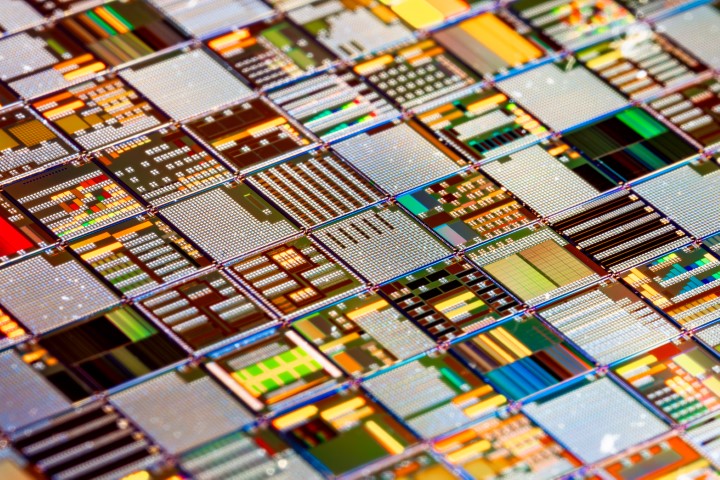
A silicon wafer used in chip fabrication. TSMC’s cutting-edge factories produce thousands of these wafers, containing countless microchips that power our devices.
Why TSMC Matters in the Tech Industry
TSMC is the world’s leading contract semiconductor foundry, meaning it builds chips for other companies. In fact, it dominates the industry with roughly 60–70% market share, far ahead of any rival. This dominance is driven by TSMC’s ability to reliably produce the most advanced chips at high volume. Major chip designers overwhelmingly choose TSMC for its cutting-edge manufacturing and massive capacity fool.com. For example, AI leaders like NVIDIA and AMD turn to TSMC to fabricate their high-performance processors. Even Apple’s latest iPhone chips come out of TSMC’s factories. In short, it doesn’t matter which gadget or AI platform wins in the market – as long as TSMC is producing the chips, it profits. This “pick-and-shovel” role in the tech gold rush of AI and 5G has made TSMC a strategic cornerstone of the industry.
TSMC’s importance also stems from its technological leadership. It was the first to mass-produce chips at the 5-nanometer and 3-nanometer nodes, ahead of peers. Its continual R&D investments keep it at least a generation ahead of most competitors in manufacturing know-how. This has translated into strong pricing power and steady business from top clients. Furthermore, TSMC’s scale (with over a dozen fabs including “GigaFabs” in Taiwan and new sites in Arizona and Japan) lets it fulfill huge orders that smaller foundries or in-house makers cannot. This unparalleled combination of scale and technology has secured TSMC’s position as the backbone of the semiconductor world.
Recent Stock Performance and Growth Outlook
TSMC’s unique position has not gone unnoticed by investors. The stock delivered robust gains amid the 2023–2025 tech boom. In 2025 alone, TSMC’s share price surged about 43%, handily outperforming many broader indices benzinga.com. By the end of 2025, TSMC was trading around $288 per share, and has continued climbing into early 2026. This upward momentum has been fueled by excitement over artificial intelligence (AI) and high-performance computing – areas where demand for TSMC’s advanced chips is soaring. In fact, Wall Street analysts expect TSMC’s earnings to grow nearly 29% annually over the next 3–5 years, thanks to surging AI investments. Such growth projections reflect optimism that TSMC will keep benefiting from massive chip orders for data centers, smartphones, and automotive tech.
Another catalyst was TSMC’s latest earnings report, which was nothing short of blockbuster. The company not only beat expectations but also predicted robust growth ahead, sparking a rally in semiconductor stocks reuters.com. Management’s strong guidance – backed by record quarterly revenues – renewed investors’ faith that the AI-driven demand isn’t just a short-term fad. With governments and enterprises pouring money into tech, TSMC’s order books are expected to stay healthy. The company is also expanding production (for example, ramping its new Arizona fab) to meet future demand, indicating confidence in its growth trajectory.
That said, TSMC’s stock hasn’t been all smooth sailing. In prior years, it faced volatility due to global chip shortages and geopolitical headlines. However, long-term investors have been rewarded as the stock steadily climbed on the back of TSMC’s earnings growth. Looking forward, analysts remain largely positive. The stock currently has a consensus “Hold” rating, but with an average 12-month price target around $348–$361, implying ~20% upside from recent prices. Some bullish analysts even envision TSMC’s stock doubling by the end of the decade if it maintains its industry lead. While such projections are speculative, they underscore TSMC’s reputation as a must-watch growth story in tech.
Valuation and Financial Highlights
Despite its strong run, TSMC’s valuation still appears reasonable compared to many tech peers. The stock trades around 24× forward earnings and about 30× trailing earnings, as of early 2026 benzinga.com. For context, this price-to-earnings (P/E) ratio is actually lower than that of other beneficiaries of the AI boom like NVIDIA or AMD benzinga.com. In other words, the market isn’t pricing TSMC at an extreme premium relative to its earnings – perhaps because it’s a manufacturing business with heavy capital costs, versus the flashy consumer-facing brands. This more moderate valuation, combined with TSMC’s high growth rate, gives it a PEG ratio (P/E to growth) that many would consider attractive.
Let’s look at a few key metrics (all approximate as of Q1 2026):
- Market Capitalization: ~$1.3–1.7 trillion USD (making TSMC one of the world’s most valuable companies) fool.com
- P/E Ratio: ~29.9 trailing and ~24.0 forward benzinga.com. This suggests investors are willing to pay about 24 times next year’s earnings for TSMC, a sign of confidence in future growth.
- Revenue & Margins: TSMC posted record revenues in 2025 and maintains healthy gross margins around 58%, thanks to its pricing power and efficient processes. Net profit margins are robust as well, reflecting strong operating leverage in the foundry model.
- Dividend Yield: ~0.7% – 1.0%. TSMC pays a modest quarterly dividend (about $2.40 per ADR share annually). While the yield is small, the company has a policy of steadily increasing dividends, and the payout ratio is comfortably under 30%. Investors thus get a bit of income while primarily aiming for growth.
- Financial Strength: The company carries a solid balance sheet with ample cash. It continues to invest tens of billions in new fabs each year without overleveraging, indicating prudent financial management.
Overall, TSMC’s valuation metrics paint a picture of a growth company that isn’t outrageously priced. In fact, TSMC trades at a lower valuation than many AI-focused peers that have seen their stocks skyrocket. This could mean there’s room for upside if TSMC delivers on growth forecasts. Of course, prudent investors will also weigh risk factors (discussed later) that could impact those earnings.
Competitive Landscape: Intel, Samsung, and AMD
TSMC’s dominance doesn’t mean it lacks competition. Let’s compare TSMC with a few key players:
- Intel: Traditionally the titan of PC chips, Intel is now also trying to compete in the foundry business. However, Intel has lagged in cutting-edge manufacturing in recent years. It struggled with delays at its 10nm node while TSMC raced ahead to 5nm and beyond. As a result, Intel has even been relying on TSMC to produce parts of its chips – a remarkable turn of events reuters.com. Intel is investing aggressively to catch up (aiming to launch its own 18A process by 2025), but as of now, it remains behind TSMC in technology. From an investor viewpoint, Intel’s stock had a resurgence in 2025 after new leadership changes, but its valuation reflects its challenges. Intel’s profit slump gave it a sky-high trailing P/E (over 600!), and even its forward P/E near 39 is higher than TSMC’s investing.com. This suggests the market is uncertain about Intel’s near-term earnings power. In short, Intel is a formidable name with vast resources, but TSMC currently holds the edge in advanced manufacturing – an edge Intel is racing to close.
- Samsung: South Korea’s Samsung is the second-largest foundry competitor. It offers contract chip production and is the only other company (besides TSMC) currently making 3nm chips in volume. However, Samsung’s foundry market share is only around 7–8%, a distant second to TSMC. Samsung has faced difficulties with yield (manufacturing efficiency) at advanced nodes, causing some customers to defect. For instance, Qualcomm initially tried Samsung’s 4nm process but later returned to TSMC for better yields. Samsung is working to improve and plans to ramp 2nm production by 2026, but it remains a smaller player in non-memory chip fabrication. Notably, Samsung’s semiconductor business also includes memory chips, where it competes with other firms in a different market. That diversification means Samsung’s profitability can swing with memory price cycles, whereas TSMC focuses on logic chips with steadier demand. Bottom line: Samsung is a serious competitor technically, but TSMC’s larger scale, higher reliability, and focus on foundry services have kept it on top. Samsung’s stock (as part of a conglomerate) trades at a lower P/E than TSMC’s, but that reflects its exposure to slower-growth segments and recent profit declines in memory.
- AMD: Advanced Micro Devices is not a manufacturing competitor – rather, it’s one of TSMC’s biggest customers and a competitor to Intel in CPU and GPU design. We include AMD here because its fortunes are intertwined with TSMC’s technology. AMD’s resurgence in the last few years (gaining PC market share from Intel and launching successful data center chips) was enabled by TSMC’s superior process nodes. By outsourcing production to TSMC’s 7nm and 5nm processes, AMD delivered chips that outperformed Intel’s, which were stuck on older tech. Investors have rewarded AMD with a strong stock performance (AMD’s stock jumped ~72% in 2025). AMD now, like Nvidia, rides the AI wave by designing in-demand chips fabbed at TSMC. From a valuation standpoint, AMD tends to have a higher P/E ratio (often in the 30s or more) reflecting its growth potential. Interestingly, TSMC’s own P/E is in a similar range or lower, despite TSMC’s arguably more stable business. While AMD and TSMC are partners, one could consider that investing in TSMC is a less volatile way to participate in the success of companies like AMD and Nvidia, since TSMC earns revenue from all chip designers. In summary, AMD’s success showcases the virtuous cycle for TSMC: as AMD and others thrive and need more chips, TSMC profits by filling that demand.
In aggregate, TSMC’s competitive moat lies in its focus and execution in manufacturing. Intel is trying to emulate TSMC’s foundry model but has a ways to go; Samsung is competitive but has ceded ground in recent years. Meanwhile, fabless firms like AMD reinforce TSMC’s role as an enabling partner. It’s telling that even Intel will partially use TSMC for upcoming chips reuters.com – a testament to TSMC’s lead. Still, competition is intensifying. Intel aims to regain process leadership by 2025–2026, and geopolitical forces (e.g. U.S. and Europe incentivizing local fabs) could shift industry dynamics. Investors should monitor these rivalries, as any tech breakthrough or major deal (say, Intel securing a big foundry client) could impact TSMC’s long-term position.
Risks and Opportunities Ahead
No investment is without risk, and TSMC has a few worth noting. Geopolitical risk is number one on most lists. TSMC is headquartered in Taiwan, and any escalation of tensions between China and Taiwan or the United States could disrupt its operations or clients’ supply chains. In fact, any serious conflict or sanctions could materially impact TSMC’s revenue. The market keeps a wary eye on this risk, even as recent diplomatic efforts aim to prevent such worst-case scenarios. TSMC is mitigating some risk by building fabs abroad (like in the U.S. and Japan), but the bulk of its capacity will remain in Taiwan for the foreseeable future.
Another concern is the cyclical nature of the semiconductor industry. Downturns in demand (for example, a slowdown in PC or smartphone sales) can hit foundry utilization rates. If the current AI spending boom cools off or proves to be a bubble, TSMC’s growth could slow. There’s also the challenge of continually improving technology: each new chip generation is more expensive to develop. If a competitor ever leapfrogs TSMC’s technology, it could erode its market share. So far, TSMC has executed well, but the pressure is always on.
On the flip side, TSMC’s opportunities are enormous. The world’s appetite for computing power is only increasing – from AI servers to electric vehicles, TSMC’s addressable market keeps expanding. The company is moving into advanced packaging and specialty technologies, which open new revenue streams. Additionally, as a trusted manufacturer, TSMC could benefit from industry trends like companies outsourcing (even Intel is now a potential customer). TSMC’s scale advantage also means that if chip orders surge (say, from a new iPhone or a breakthrough AI model), it can capture that upside more readily than smaller rivals. Lastly, TSMC’s prudent financial management gives it resilience; it can sustain heavy investments during downturns and emerge stronger in the next upcycle.
The Road Ahead for Investors
For retail investors and analysts alike, TSMC’s stock presents a mix of stable strengths and high-growth appeal. On one hand, it’s a picks-and-shovels play on every major tech trend – whether it’s AI, 5G, or edge computing, TSMC earns its share by manufacturing the chips behind the scenes. On the other hand, it’s a mega-cap company with world-class financials, which lends a degree of stability and credibility. This balance can be attractive if you seek exposure to tech growth without the wild volatility of smaller chip stocks.
That said, you should stay informed and approach with a long-term mindset. Keep an eye on quarterly results and guidance (as TSMC’s own outlook often signals the health of the tech sector). Watch how the competitive race with Intel and Samsung unfolds in the next couple of years. Importantly, consider the geopolitical landscape – while no one can predict it, it’s a factor that warrants diversification and position sizing in your portfolio.
In conclusion, TSMC stands as a professional, innovative, yet under-the-radar giant that continues to inspire confidence through its crucial role in technology. If you’re looking for an investment at the intersection of cutting-edge tech and reliable growth, TSMC is a stock to keep on your radar. As always, perform your due diligence or consult a financial advisor to ensure it fits your investment goals. But with its powerful industry position, solid growth prospects, and reasonable valuation, TSMC offers a compelling story for those wanting to invest in the future of the semiconductor revolution.