

Imagine if your body could burn extra calories without any extra effort. It might sound like science fiction, but scientists have identified a promising way to make our cells work harder and burn more energy – safely and effectively phys.org. For millions struggling with weight loss, this discovery could be a game-changer in the fight against obesity.
Obesity is now a global epidemic, affecting over 40% of Americans and many more worldwide nih.gov. Excess weight increases the risk of serious conditions like type 2 diabetes, heart disease, and even cancer. Yet, current weight-loss medications often require regular injections and can cause unpleasant side effects. Clearly, a safer, easier approach to slimming down is badly needed. That’s where the new research comes in: by tweaking how our cellular “power plants” (mitochondria) produce energy, scientists have found a way to make cells burn more calories and potentially boost metabolic health in the process phys.org.
Meet Your Metabolism: Mitochondria and Burning Calories
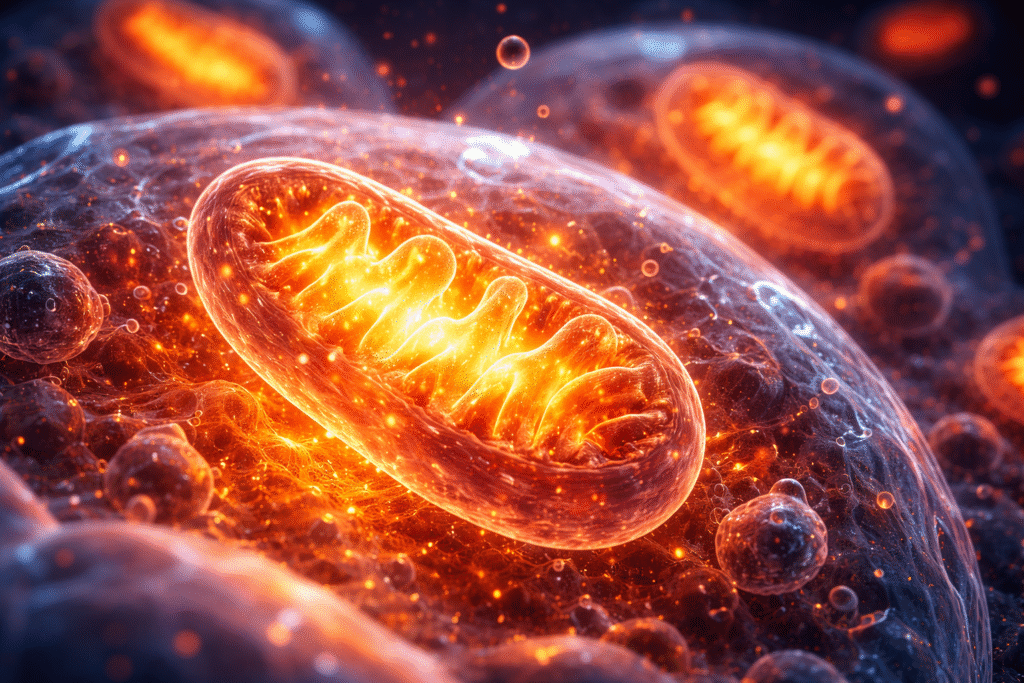
To understand this breakthrough, let’s look at how your body burns calories in the first place. Inside nearly every cell are tiny structures called mitochondria, often nicknamed the cell’s “powerhouses.” Their job is to turn the food you eat into usable energy, a chemical called ATP phys.org. In other words, mitochondria are your metabolic engines. Normally, they do this efficiently, squeezing as much useful energy as possible out of the calories you consume.
However, there’s a twist: if mitochondria become less efficient, they start wasting some of that energy as heat. In fact, your body already uses this trick in certain situations. Brown fat cells, for example, burn energy as heat to keep you warm – they even have a special protein called UCP1 that acts like a built-in uncoupler to make them intentionally inefficient nih.gov. This is how infants stay warm and how hibernating animals survive winter: by burning extra calories for heat instead of storing them as fat. For most adults, brown fat reserves are small, but the idea of making ordinary cells behave a bit like brown fat is a tantalizing way to rev up metabolism.
Scientists refer to this effect as mitochondrial uncoupling. Think of a hydroelectric dam generating power: normally, water flows through turbines to produce electricity. If there’s a leak in the dam, some water bypasses the turbines – that energy is lost as heat instead of becoming electricity. Likewise, an uncoupler molecule creates a “leak” in the cell’s energy process, so some fuel burns off as heat rather than being stored, forcing the cell to burn even more fuel to meet its needs phys.org. Essentially, it cranks up your metabolic furnace. “Mitochondrial uncouplers disrupt [the energy production], triggering cells to consume more fats to meet their energy needs,” explains Dr. Tristan Rawling, lead author of the new study. By making cells a bit less efficient, we make them work harder and burn more calories.
Why is this exciting? Boosting your body’s calorie-burning engine could help weight control without requiring constant dieting or exercise. As one metabolism researcher noted, “boosting this kind of metabolic process could support weight loss or weight control in a way that is perhaps easier to maintain over time than traditional dieting and exercise”nih.gov. In other words, a safe uncoupling therapy might one day complement healthy lifestyle habits, making it easier to keep the weight off.
A Deadly Weight-Loss Drug and What It Taught Us
The idea of artificially turbo-charging calorie burn isn’t new – but early attempts were downright dangerous. About a century ago, factory workers in World War I France who handled a chemical called 2,4-dinitrophenol (DNP) began shedding pounds mysteriously. They also ran high fevers, and some tragically died. Scientists discovered that DNP was an uncoupler: it made cells burn so much fuel as heat that patients literally “cooked” from the inside.
By the 1930s, DNP was briefly marketed as one of the first diet pills – and it did make people lose weight remarkably fast. But it was essentially a poison. The margin between an effective dose and a lethal dose of DNP is terrifyingly small phys.org. Many users suffered organ failure or death from overheating. DNP was soon banned due to its severe toxicity, and it remains infamous as a fat-burning “too hot to handle.”
Pro Tip: Avoid unapproved “fat-burning” pills or chemicals like DNP at all costs – they are extremely dangerous and banned for a reason. Focus on safe, evidence-based weight loss methods and consult a healthcare professional before trying any new supplement.
The DNP saga taught researchers an important lesson: making cells burn more calories works for weight loss, but doing it recklessly can be fatal. The challenge has been finding a gentler way to get the benefits of uncoupling without the deadly side effects. For decades, this seemed like chasing a unicorn. But now, scientists think they’ve found a solution.
A New, Safer Way to Boost Metabolism
Fast forward to today: a team of researchers from University of Technology Sydney (UTS) and colleagues in Canada have developed an experimental approach to safely “uncouple” mitochondria and boost calorie burn. Their study, published in the peer-reviewed journal Chemical Science in late 2025, describes how they created “mild” uncoupler compounds by precisely tweaking the molecules’ chemical structure phys.org. By fine-tuning the design, they could dial in just the right amount of inefficiency in the cell’s energy production.
In lab tests, these new compounds showed striking results. Some of the molecules caused mitochondria to burn more fuel without harming the cells or draining their ATP energy supply uts.edu.au. In contrast, other variants (with slightly different structures) behaved more like old DNP, pushing cells into the risky uncoupling zone. By comparing the safe vs. unsafe versions, the scientists pinpointed why the “mild” uncouplers were different. Essentially, the gentle compounds slow the metabolic process just enough that cells can handle it, avoiding the runaway overheating effect of stronger uncouplers. This discovery offers a blueprint for designing metabolism-boosting drugs that maximize calorie burn while minimizing danger.
Key breakthroughs from the study include:
- Precision design: The researchers adjusted the chemical structure of uncoupler molecules to fine-tune how strongly they rev up a cell’s metabolism phys.org. This level of control turned a once blunt, toxic approach into something much more targeted and safe.
- Gentle metabolic boost: At the right settings, the new “mild” uncouplers made mitochondria work harder without hurting the cells or shutting down their normal energy needs uts.edu.au. Cells burned extra fat and calories, yet kept functioning normally – a crucial balance for any therapy.
- Built-in safety limit: The mild uncouplers slow the energy-burning process to a manageable pace. Think of it as creating a small “leak” in the dam instead of blowing the whole dam open. This way, cells aren’t overwhelmed, and the body’s core functions stay safe (no extreme fevers or organ failure).
In short, the UTS team demonstrated that we can uncouple mitochondria just a little enough to boost calorie burning, but not so much that it cooks the cell. This is a revolutionary proof of concept, considering the grim history of compounds like DNP. It opens the door to a new class of weight-loss treatments that work by accelerating your cellular engines rather than suppressing appetite or blocking fat absorption.
More Than Weight Loss: Extra Health Benefits
Interestingly, the benefits of these mild uncoupler compounds may go beyond weight loss. In the study, the researchers noticed that gentle uncoupling had a side effect: it reduced oxidative stress inside the cells ndtv.com. Oxidative stress refers to the cellular damage caused by excess free radicals (a byproduct of metabolism). High oxidative stress is linked to aging, inflammation, and diseases like dementia. By lowering this stress, a mild metabolic boost could actually improve overall metabolic health. In fact, the team suggests it might provide anti-aging effects and even protect against neurodegenerative diseases such as Alzheimer’s.
Think of it this way: running our cellular engines a bit inefficiently might sound wasteful, but it can prevent the engine from gumming up. There’s some precedent for this idea – scientists have long observed that a little uncoupling in mitochondria can reduce the production of harmful reactive oxygen species (ROS), which are a major cause of cellular aging. So, a future therapy based on these compounds might not only help you shed pounds, but also keep your cells youthful and resilient in the long run. That’s a win-win for both metabolic health and longevity.
Looking Ahead: Toward Future Weight-Loss Treatments
While these findings are exciting, it’s important to note that this research is still in its early stages. So far, the experiments have been in cells (and possibly animals); human trials will be the next big hurdle. The good news is that we now have a clear framework for designing safer metabolism-boosting drugs. “The research offers a framework for designing a new generation of drugs that could induce mild mitochondrial uncoupling and harness the benefits without the dangers,” the authors explain ndtv.com. In the future, we could see pill-based therapies that help people burn extra calories at the cellular level – essentially an exercise-mimicking boost – without the side effects of today’s weight-loss medications.
Imagine a treatment that causes your body to toast away excess fat as gentle heat, all while protecting your cells and organs. It could complement the traditional pillars of weight management (a healthy diet and exercise), making it easier to maintain a healthy weight. For individuals who struggle with obesity or slow metabolism, this would be a game-changing addition to the toolkit of doctors and nutritionists.
Of course, scientific breakthroughs take time to translate into real-world therapies. Rigorous testing for safety and efficacy lies ahead. But the spark of hope is there: a future where losing weight might be as simple as taking a safe medication that tells your cells to burn a little hotter. In the meantime, what can you do? Focus on proven strategies to support your metabolism: stay active, build muscle tone, eat a balanced diet, and get enough sleep. These habits keep your mitochondria healthy. And be wary of any “miracle” weight-loss product that hasn’t been vetted by science – if it sounds too good to be true, it probably is. The emerging research on mild uncouplers shows that real solutions are on the horizon, and they’re grounded in solid science and safety. By staying informed and embracing healthy lifestyle choices, you’ll be ready to take advantage of these innovations when they arrive. Your cells have remarkable calorie-burning power – and soon, thanks to science, we may all be able to tap into it for a healthier, leaner life.