

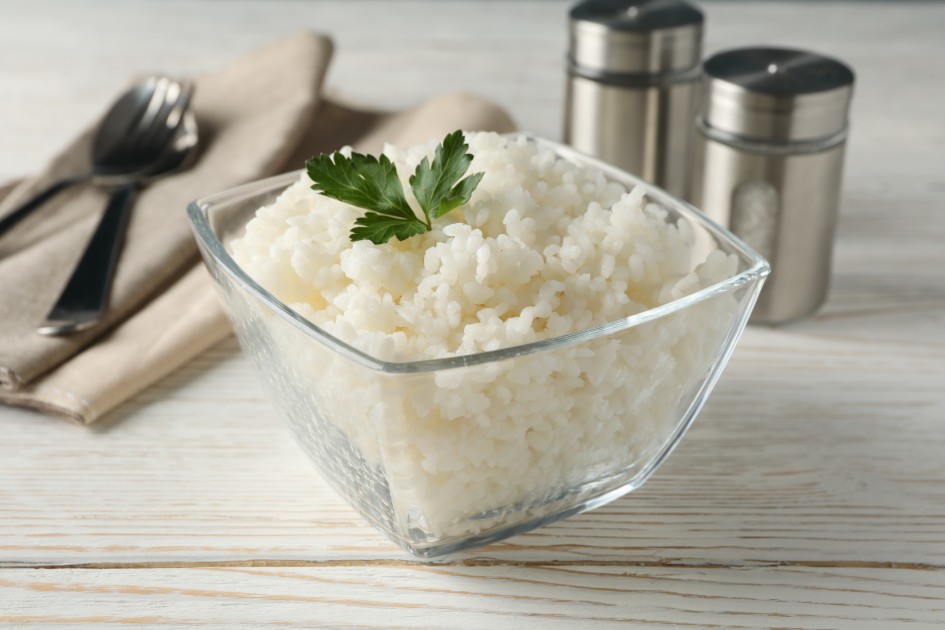
You cook rice. You refrigerate it overnight. You reheat it the next day. And somehow — according to a growing wave of nutrition-curious people online — your body now absorbs fewer calories and experiences a blunted blood sugar spike. It sounds like internet folklore. But there’s a real mechanism behind it, and peer-reviewed research to back it up.
The science involves something called resistant starch — a type of carbohydrate that your small intestine cannot fully digest. When certain cooked starches are cooled, their molecular structure changes in a process called retrogradation, converting digestible starch into resistant starch. The result is a carb that behaves more like a dietary fiber than a fast fuel source.
If you track macros, manage your glycemic response, or simply want to get more nutritional value from the foods you already eat, cooling rice resistant starch is worth understanding. Here’s what the science actually says, what it doesn’t, and exactly how to apply it.
What Is Resistant Starch — And Why Does It Matter?
Not all carbohydrates are processed the same way. Most cooked starches — white rice, pasta, potatoes — are rapidly broken down in the small intestine into glucose, triggering a fast rise in blood sugar and a corresponding insulin response. Resistant starch escapes that process.
Instead of being absorbed in the small intestine, resistant starch travels to the large intestine, where gut bacteria ferment it. This fermentation produces short-chain fatty acids (SCFAs), particularly butyrate — a compound linked to improved gut barrier function, reduced inflammation, and better insulin sensitivity. A 2022 review in Food Chemistry identified resistant starch as one of the most impactful dietary fibers for gut microbiome health, noting its role in promoting beneficial bacterial populations, including butyrate-producing species.pubmed
Further supporting this, a landmark study published in mBio (American Society for Microbiology) confirmed that a high-resistant-starch diet consistently increased the relative abundance of butyrate-producing bacteria — including Faecalibacterium prausnitzii, Roseburia, and Ruminococcus — with measurable increases in fecal butyrate and propionate. journals.asmThe glycemic benefit is equally well-documented. A randomized, single-blind crossover study published in the Asia Pacific Journal of Clinical Nutrition found that consuming retrograded rice — cooked, cooled for 24 hours at 4°C, then reheated — produced a significantly lower postprandial blood glucose response compared to freshly cooked rice (125 vs. 152 mmol·min/L; p=0.047). The resistant starch content more than doubled: from 0.64 g to 1.65 g per 100g.pubmed
The Science of Retrogradation: What Cooling Actually Does
When rice is cooked, starch granules absorb water and swell in a process called gelatinization — this is what makes cooked rice soft and digestible. When you cool that rice in the refrigerator, a portion of those gelatinized starch molecules recrystallize into a more compact, ordered structure. This is retrogradation. The recrystallized starch is harder for digestive enzymes to break down, classifying it as Type 3 resistant starch (RS3).
Research from the International Journal of Food Science and Technology confirmed that storage time is the most critical variable — longer cooling produces greater recrystallization and higher resistant starch yield. Refrigerating cooked rice at 4°C for 24 hours consistently produced the highest RS3 conversion compared to shorter cooling periods.pubmed
A comprehensive 2024 narrative review in Frontiers in Nutrition further confirmed that microwave reheating of rice — regardless of water content — increases RS content while reducing the digestible starch fraction, validating the cook-cool-reheat protocol as a reliable way to shift the carbohydrate profile of rice.pmc.ncbi
Does Reheating Undo the Effect?
This is the question most people get wrong. The good news: reheating retrograded rice does not fully reverse the resistant starch conversion. The same Asia Pacific Journal study confirmed that rice cooled for 24 hours then reheated retained significantly higher resistant starch content than freshly cooked rice — and still produced a measurably lower glycemic response in the clinical trial.pubmed Furthermore, a 2022 clinical study in 32 patients with type 1 diabetes confirmed that retrograded, reheated rice produced significantly lower peak postprandial glycemia than fresh rice (11 vs. 13 mmol/L), validating the protocol in a high-stakes clinical population.pubmed
The practical implication: yes, you can reheat your meal-prepped rice and still benefit. Just avoid re-boiling or over-steaming, which can partially re-gelatinize the starch and reduce the effect.
⚡ Pro Tip
Add a small amount of fat — a teaspoon of olive oil or coconut oil — to your rice before refrigerating. Research published in Food Hydrocolloids suggests that lipids can form complexes with amylose during cooling, further increasing resistant starch content. This is a legitimate two-for-one: a better fat profile and more resistant starch in one step.
What the Research Doesn’t Claim — And Why That Matters
The internet has a habit of turning promising nutrition science into miracle claims. Cooling rice resistant starch is genuinely useful — but it’s not a metabolic reset button. Here’s where the evidence draws a clear line.
The Calorie Reduction Is Modest
Some sources claim cooling rice cuts its calorie count by up to 50%. That figure is not supported by the current body of evidence. The resistant starch conversion is real, but the increase per 100g of cooked rice — from roughly 0.64g to 1.65g — is meaningful but not dramatic. The functional impact on glycemic response is proportionally larger than the raw numbers suggest, but anyone claiming dramatic caloric reductions should be questioned for sources.
It Works Best as Part of a Broader Strategy
Resistant starch from cooled rice is one tool in a nutritional toolkit, not a standalone intervention. Its real power emerges when combined with other glycemic management strategies. A 2024 meta-analysis of 154 controlled feeding trials published in the Journal of Nutrition found that adding dairy or plant protein to a carbohydrate-containing meal produced physiologically significant reductions in postprandial glucose AUC in adults without diabetes, with dairy and plant proteins reducing glucose AUC by 52% and 55%, respectively, per gram protein per gram carbohydrate. pubmed Combine retrograded rice with a quality protein source, and you get a compounding glycemic benefit.
How to Use Cooling Rice Resistant Starch Practically
The protocol is simple. The consistency is where most people fall short. Here’s a repeatable system you can integrate into your existing meal prep routine.
- Cook your rice as normal — white rice, jasmine, or basmati all undergo retrogradation. Higher-amylose varieties like long-grain white rice tend to produce more resistant starch due to their molecular structure. pubmed Cool uncovered at room temperature for 30 minutes, then transfer to an airtight container and refrigerate for a minimum of 12 hours. 24 hours produces the highest resistant starch yield.
- Reheat gently — microwave at medium power or warm in a pan with a small splash of water. Avoid re-boiling. Eating temperature (not piping hot) preserves the most RS3.
- Pair with protein and high-fiber vegetables at the same meal to further reduce glycemic response. Research consistently shows that food order and macronutrient pairing compound the blood sugar benefit beyond what resistant starch alone achieves.
- Track your response if you have access to a continuous glucose monitor (CGM) or post-meal glucometer. Individual glycemic responses to resistant starch vary based on gut microbiome composition, insulin sensitivity, and baseline diet.
You don’t need to overhaul your diet to benefit from this. If rice is already a staple in your meal prep, the only change is when you eat it — not how much or how often.
The Bottom Line on Cooling Rice and Resistant Starch
Cooling rice resistant starch is not hype. The retrogradation mechanism is real, the glycemic benefit is documented across multiple clinical studies, and the gut health implications — via SCFA production and microbiome modulation — are supported by legitimate nutritional science. What it is, however, is incremental: a meaningful upgrade to a food you’re probably already eating, not a transformation on its own.
For the macro-tracking, health-conscious adult who already eats rice regularly, this is a zero-cost optimization. Cook it. Cool it for 24 hours. Reheat it gently. Pair it with protein and vegetables. That’s it.
Start this week: the next time you cook rice, make a double batch, refrigerate it overnight, and note how you feel after eating it the following day. If you have a CGM or glucometer, measure your two-hour post-meal glucose and compare it to your freshly-cooked baseline. Let the data do the convincing.