Ever wonder why you can pick up a new skill so quickly, while even the smartest AI struggles? Scientists are finding that your brain is a master of adaptability because it reuses hidden “learning blocks” to tackle fresh challenges. In other words, the mind snaps together mental building blocks – much like Lego pieces – to create new thoughts and behaviors on the fly. This amazing ability might be the key to why humans learn faster and more flexibly than machines. In this article, we’ll explore the latest research revealing these cognitive Legos in action, how they give us an edge over AI, and what other experts say about the brain’s ingenious learning strategies.
The Brain’s Secret: Reusable Cognitive “Legos”
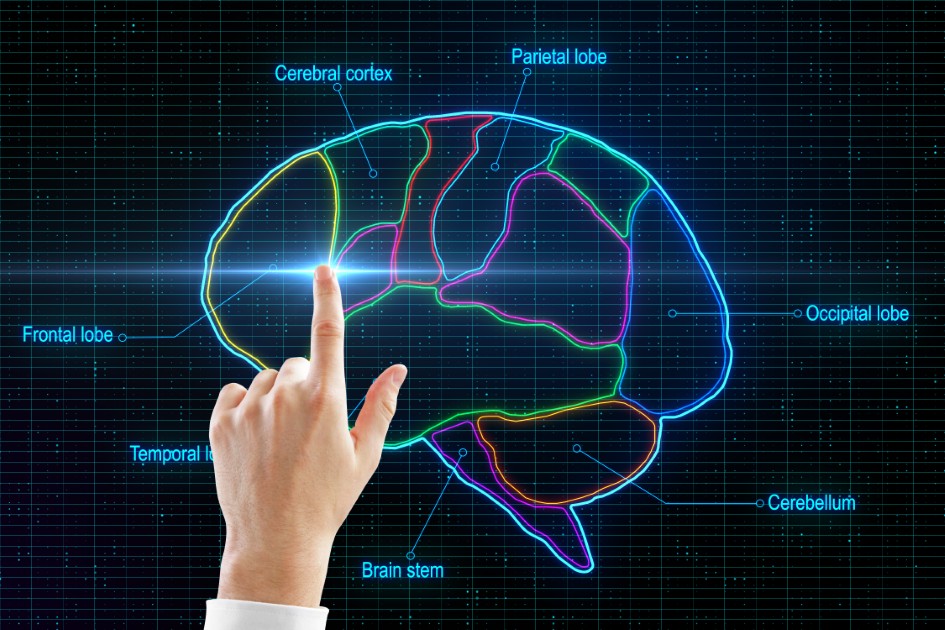
The human brain’s flexibility comes from compositionality – a big word meaning we build new skills from combinations of simpler ones. Think of how you learn: if you can ride a bicycle, picking up a motorcycle feels easier because you’re reusing basic skills (balancing, braking) in a new context. Recent research by Princeton neuroscientists confirms that our brains literally do this, reassembling the same neural “blocks” for different tasks. “We found that the brain is flexible because it can reuse components of cognition in many different tasks. By snapping together these ‘cognitive Legos,’ the brain is able to build new tasks,” explains neuroscientist Tim Buschman, pni.princeton.edu. In their study, monkeys were trained to switch between visual puzzles – judging shapes vs. colors – while the researchers recorded their brain activity. Despite the changing rules, patterns in the monkeys’ prefrontal cortex (a brain hub for complex thinking) kept reappearing whenever parts of tasks were similar. It was as if the brain pulled out the same trusty blocks for “determine color” or “make eye movement,” then recombined them to meet the demands of each new game.
What are these blocks, exactly? They’re groups of neurons that work together toward a specific goal, like distinguishing red from green, sciencedaily.com. Dr. Buschman likens each cognitive block to a function in a computer program: “One set of neurons might discriminate color, and its output can be mapped onto another function that drives an action. That allows the brain to perform a task by sequentially performing each component of that task”. In other words, your brain breaks a task into parts – like identifying the stimulus, deciding on a response, and executing movement – and assigns a reusable neural module to handle each step. Need to do a new task? No problem: the brain snaps together the relevant modules in a new configuration, instead of starting from scratch, pni.princeton.edu. This efficient strategy was most evident in the prefrontal cortex, suggesting that this frontal brain region serves as a flexible “hub” where cognitive building blocks are assembled and reused.
Turning Blocks On and Off
Another clever trick: the brain knows when to quiet certain blocks that aren’t needed, so they don’t interfere. “The brain has a limited capacity for cognitive control,” notes researcher Sina Tafazoli. “You have to compress some abilities so you can focus on those that are currently important,”pni.princeton.edu. If you’re focusing on shape, for example, your mind momentarily dims the “color” circuits so they don’t distract you. By selectively activating and suppressing different blocks, your brain stays on task without getting overloaded. This dynamic control – like turning Lego pieces on or off – helps explain how we seamlessly shift gears between tasks in daily life.
Why Humans Outlearn AI
All this gives biological brains a huge advantage over today’s artificial intelligence. Modern AI systems can be extremely good at a single task, but they tend to falter when juggling multiple skills or learning new ones sequentially. One major issue is catastrophic forgetting: when an AI learns a new task, it often overwrites or “forgets” what it learned before. “If an artificial neural network knows how to bake a cake but then learns to bake cookies, it will forget how to bake a cake,” Dr. Tafazoli explains, pni.princeton.edu. Human brains, on the other hand, minimize redundant learning by reusing mental components. We don’t wipe our old skills when we learn something new – we build on them. Essentially, your brain’s hidden blocks prevent the kind of catastrophic interference that plagues AI. This might be why you can pick up a new video game or adapt to a new smartphone interface quickly, whereas an AI would need extensive retraining for each new scenario.
Researchers believe that adding this principle of compositional reuse to AI could make machines much more adaptable. Imagine an AI that learns like we do – snapping together modular skills without erasing old ones. Such systems could continuously learn over time, handling many different tasks at once. In fact, your brain is providing a template: by studying how neural circuits interconnect like reusable Lego bricks, scientists hope to design smarter algorithms that remember and repurpose knowledge. As Buschman puts it, understanding these cognitive Legos could help build AI that retains old skills while learning new ones.
Expert Perspectives: The Building-Block Brain
The idea that the brain reuses parts of itself for new challenges isn’t entirely new – but now there’s concrete evidence. Psychologists have long suspected that neural reuse is a fundamental principle of brain organization. According to this theory, circuits set up for one purpose can be “recycled” or redeployed for different purposes without losing their original function pubmed.ncbi.nlm.nih.gov. In fact, some cognitive scientists argue that evolution favored brains that repurpose existing circuits rather than grow an entirely new module for every skill. Michael Anderson, a neuroscientist who championed neural reuse theory, noted that brain circuits often gain new uses without major structural changes – sometimes all it takes is connecting them to a new partner circuit. Your brain is less like a Swiss army knife with isolated tools and more like a Lego kit, where pieces are continually recombined into new inventions.
Neuroscientists studying cognitive flexibility also see evidence of a building-block strategy. Michael Cole of Rutgers University describes the brain’s control networks as holding “compositional (abstract and reusable) rule representations” that can be flexibly combined to route information and support new task goals colelab.org. In simpler terms, your brain stores general rules or strategies that it can remix in novel ways – exactly the kind of “cognitive Lego” approach demonstrated in the Princeton monkey study. Brain imaging research shows a set of regions (often called the multiple-demand network, including parts of frontal and parietal cortex) light up for many different tasks, hinting that a shared pool of neural resources is being tapped for various challenges. All these insights converge on a powerful message: the brain thrives by reusing and recombining its mental machinery.
Building Blocks Beyond Thinking – in Movement and Language
It’s not just abstract thought – even our physical skills rely on modular building blocks. For example, motor neuroscientists have found that complex movements are constructed from simpler sub-movements or “primitives.” A recent study from Carnegie Mellon University showed that the human brain has an “alphabet” of basic hand movements, which it combines to accomplish every imaginable action cmu.edu. Just as every word in English is made from letters A–Z, your brain can string together a small set of kinematic synergies (coordinated finger, hand, and arm motions) to perform anything from turning a key to using scissors. The researchers found that a region in the parietal lobe (the supramarginal gyrus) serves as an assembly hub, blending these elemental movements into complex action sequences. “From this closed set of basic building blocks, the brain constructs the full repertoire of actions we can perform with the hand,” said lead author Leyla Caglar. This mirrors the idea behind cognitive blocks: whether it’s grasping a cup or grasping a concept, the brain is a master at Lego-like recombination. Such modular organization has even been observed in the spinal cord for locomotion – animals use a handful of muscle synergies as building blocks of movement, mixed and matched to produce different gaits and behaviors, researchgate.net. Across domains, the theme is clear: simpler neural components form the toolkit for flexible, creative skills.
From Brain Science to Better Learning (and Living)
Uncovering the brain’s hidden learning blocks isn’t just fascinating neuroscience – it carries inspiring implications for all of us. For one, knowing that our minds build on prior skills means you can learn new things more effectively by connecting them to what you already know. (Pro tip: The next time you tackle a new challenge, ask yourself, “What does this remind me of?” By linking new knowledge to familiar mental blocks, you’ll learn faster and retain more.) This strategy of learning by analogy is essentially your brain’s default mode, so make it work for you.
There are also broader, game-changing applications. In artificial intelligence, incorporating brain-like building blocks could create AI that learns how to learn, adapting to new tasks without forgetting the old. Researchers are already looking at ways to give AI algorithms a form of memory that reuses learned skills instead of overwriting them, sciencedaily.com. On another front, clinical psychology stands to benefit: conditions like stroke, schizophrenia, or obsessive-compulsive disorder often involve difficulty applying old knowledge to new situations. If these issues stem from a breakdown in the brain’s ability to recombine cognitive blocks, therapies could be developed to restore that capacity. “Imagine being able to help people regain the ability to shift strategies, learn new routines, or adapt to change,” says Dr. Tafazoli. “In the long run, understanding how the brain reuses and recombines knowledge could help us design therapies to restore that process”. It’s a hopeful vision: leveraging the brain’s own Lego-like genius to heal minds and inspire smarter machines.
In summary, modern science is finally pulling back the curtain on our brain’s remarkable DIY strategy for learning. By snapping together modular “cognitive Legos,” your brain can meet each new task armed with pieces of past experiences. This hidden architecture is why you can continually grow, adapt, and excel in a changing world – a feat that still stumps our most advanced AI. It’s an encouraging reminder that inside your head is an engine of innovation, always ready to assemble the building blocks of tomorrow’s breakthroughs. So go ahead and embrace your brain’s flexible mindset: every new challenge is just another opportunity to build on what you already know, one block at a time.