

Step onto the mat and unlock strength, flexibility, and calm—no experience needed. These beginner‑friendly yoga poses and short daily routines melt stress, ease pain, and build a foundation you can grow from for life. Whether you’re a busy professional, a new mom, or an active senior, dedicating just 20 minutes a day to gentle yoga can transform your body and mind. In this guide, we’ll explore the science-backed benefits of yoga and walk through a pose-by-pose routine that fits into any schedule. Get ready to feel stronger, more limber, and centered in minutes a day.
Why 20 Minutes of Yoga Is All You Need (Benefits & Evidence)
Even a brief yoga practice delivers remarkable benefits for your whole being. Research from Harvard Medical School confirms that yoga improves your strength and flexibility, reduces stress, and even boosts your immune system health.harvard. A consistent yoga routine can fight fatigue, help you sleep better, and invigorate your body and mind – important perks if you’re recovering from a busy day or even from a major life event. In fact, one study found that a single 20-minute session of yoga sharpened participants’ focus and working memory more than a cardio workout, immediately boosting brain function and concentration news.illinois.
Yoga’s mental health benefits are just as impressive. The mindfulness and breathing in yoga trigger your relaxation response, melting away anxiety and tension. A 2023 scientific review of dozens of studies concluded that yoga can significantly reduce symptoms of depression and anxiety. Over time, these calming effects lower your body’s stress hormones and can even improve your mood and resilience. It’s no wonder so many people say they feel happier and more balanced on days they practice yoga.
Importantly, yoga meets you where you are – at any age or stage of life. If you’re a postpartum mom, gentle yoga can speed up recovery and help relieve aches. Studies indicate postnatal yoga not only strengthens your abdominal core and pelvic floor muscles but also eases postpartum pain and lowers anxiety and depression levels. If you’re an active older adult, yoga is a game-changer for maintaining mobility. Stretching and balance poses will improve your flexibility and stability, which naturally decline with age. In fact, seniors who did a short yoga program significantly improved their balance and reduced their risk of falls healthline.com. And for busy professionals glued to a desk, yoga helps undo neck and back stiffness while reducing stress. It can even counteract all that sitting: researchers have found yoga can relieve low-back and neck pain and improve overall quality of life in people with chronic pain conditions. healthline.com Bottom line – you don’t need hours of exercise to feel better. A focused 20-minute yoga practice done regularly can ignite profound changes in your body’s strength, flexibility, and endurance, while calming your mind and brightening your mood.
20-Minute Beginner Yoga Routine (Pose-by-Pose Guide)
Your 20-minute yoga flow is broken down into simple, accessible moves. We’ll pair breath with movement, gently working all major muscle groups and releasing tension from head to toe. Tip: Move at your own pace and remember to breathe deeply as you hold each pose. If something doesn’t feel right, ease off or modify – yoga should never cause sharp pain. Let’s get started!
- Mountain Pose (Tadasana) – Ground and align. Stand tall with your feet hip-width apart or together, toes pointing forward. Relax your shoulders down and lift the crown of your head up. Engage your thigh muscles slightly and feel your spine lengthen. In Mountain Pose, close your eyes for a moment and take 3-5 slow breaths. This pose improves posture and body awareness – it’s a perfect start to center yourself and cultivate calm focus.
- Cat-Cow Stretch (Marjaryasana/Bitilasana) – Warm up your spine. Come onto your hands and knees in a tabletop position (shoulders over wrists, hips over knees). Inhale and drop your belly while lifting your chest and tailbone – this is the Cow pose. Exhale and round your back, tucking your chin and tailbone under for Cat pose. Continue flowing Cat-Cow for 5 full breaths, gently mobilizing the spine. This rhythmic motion loosens tight back muscles, increases spinal flexibility, and relieves tension from sitting all day. Let your breath lead the movement, warming up the body.
- Downward-Facing Dog (Adho Mukha Svanasana) – Full-body energizer. From hands and knees, tuck your toes under, press into your palms, and lift your hips up and back. Your body forms an inverted “V” shape – knees can stay bent if your hamstrings are tight. Spread your fingers and press your heels toward the floor (it’s okay if they don’t touch). Relax your head between your arms. Hold for 5 breaths, feeling the stretch along your calves, hamstrings, and spine. Downward Dog strengthens your arms and shoulders while lengthening the back body. It also improves circulation (you’re briefly upside-down) which can boost energy. Pro tip: if this pose is challenging, pedal your feet one at a time or take Child’s Pose as a rest, then come back up.
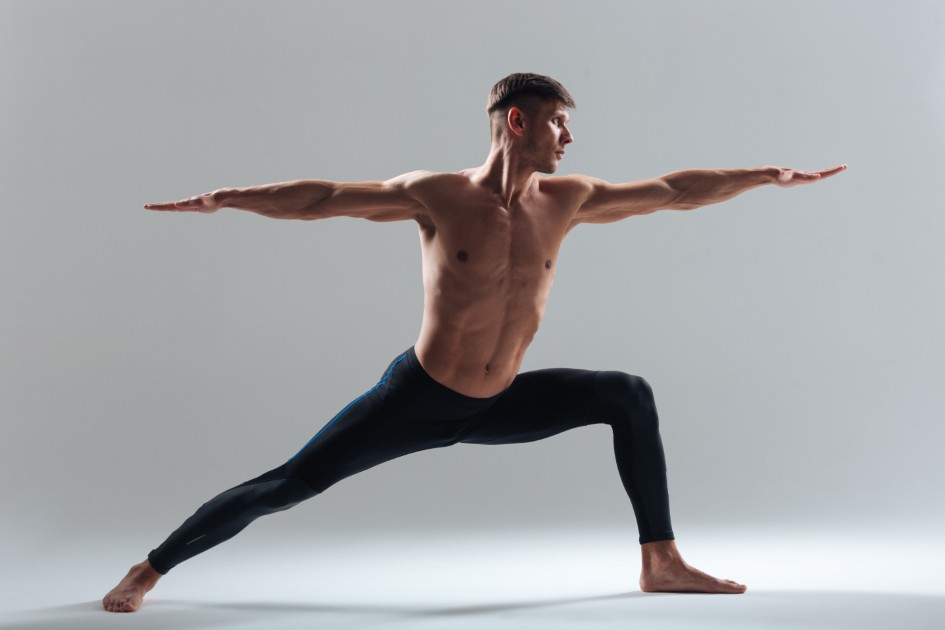
- Warrior II (Virabhadrasana II) – Build strength and confidence. Step your right foot forward into a lunge and turn your left foot out, so your front heel lines up with your back arch. Bend your front knee roughly 90° (knee over ankle) while keeping your back leg straight. Raise your arms to shoulder height, reaching out to the sides, and gaze over your front fingertips. You are now a proud Warrior! Hold for 5 slow breaths. Feel your legs working and chest opening. This pose strengthens the thighs, glutes, and core, and increases hip flexibility. It also cultivates focus and stability – imagine yourself strong and grounded. Straighten your front leg, pivot your feet, and switch sides for another 5 breaths.
- Tree Pose (Vrksasana) – Improve balance and focus. Stand tall and shift your weight onto your right foot. Place your left foot on your right ankle, calf, or inner thigh (avoid the knee) – wherever you can balance. Bring your hands together at your heart or raise them overhead like branches. Find a point in front of you to focus your gaze (this helps balance). Hold for 5 breaths, feeling all the tiny muscles in your ankles and core engage to keep you steady. It’s okay to wobble – that’s your body learning! Tree Pose strengthens your standing leg and core, and is fantastic for developing balance and concentration. Gently lower your left foot and repeat on the other side. Modification: If you’re uneasy, touch a wall or chair for support as you find your balance.
- Child’s Pose (Balasana) – Stretch and relax. Kneel on the mat, big toes together, and sit back on your heels. Open your knees about hip-width (or wider if comfortable) and fold your upper body forward, resting your forehead on the mat (or on stacked fists or a pillow). Extend your arms forward or let them relax by your sides. Take slow breaths, feeling your back body gently rise and fall. Child’s Pose releases low-back tension, gently opens the hips, and calms the nervous system. This is a rest pose you can return to anytime you need during your practice. Stay here for about 5 breaths (or longer if it feels really good!).
- Final Relaxation (Savasana) – Reset and rejuvenate. Lie down on your back and let your legs and arms flop open comfortably. Close your eyes and allow your breath to return to normal. Savasana may sound fancy, but it simply means letting go. Scan your body and consciously relax any areas of lingering tension – your jaw, shoulders, hips, etc. Stay here for 2-3 minutes. This final pose gives your body and mind a chance to absorb all the benefits of the previous poses. It’s like hitting the “reset” button – you’ll step off your mat feeling refreshed, peaceful, and ready to face the rest of your day.
Pro Tips for Beginners
- Start where you are: Yoga is truly for everybody. Don’t worry if you can’t touch your toes or if your balance isn’t great at first. Embrace being a beginner – every yogi was one once! Focus on small improvements: maybe today you reach a little further or feel a bit more relaxed than yesterday. Consistency matters more than perfection.
- Breathe and listen to your body: Deep, steady breathing is the cornerstone of yoga. If a pose feels intense, breathe through it calmly, but also listen to your body’s signals. There’s a difference between discomfort and pain – if something hurts sharply, ease out of the pose. You can always modify (use a cushion, bend your knees, use a chair for support) so the practice meets your needs. Respect your limits and celebrate what your body can do.
- Make it a habit: The key to transformation is regular practice. Schedule your 20-minute yoga session like an important meeting with yourself – perhaps first thing in the morning to energize your day, or in the evening to unwind. Keep your yoga mat somewhere visible as a reminder. Even on the busiest days, try to do a few minutes of stretching or breathing. Consistency will build incredible progress over time, turning those 20-minute sessions into a lifelong healthy habit.
- Stay positive and patient: Approach your yoga with a sense of play and curiosity. Instead of saying “I’m not flexible,” reframe it as “I’m becoming more flexible each day.” Yoga is a journey, not a destination – every time you show up on the mat, you’re winning. Celebrate the small wins, like a deeper stretch or an extra breath in balance. And if your mind wanders or you skip a day, that’s okay. Yoga teaches self-compassion – simply start again and smile, knowing that you’re doing something wonderful for yourself.
Ready to Transform? Roll Out Your Mat!
You’ve learned the moves – now it’s time to take action. Carve out just 20 minutes today for your beginner yoga routine and see how you feel afterward. Step onto your mat and begin your transformation. Envision stress melting off your shoulders with each stretch, and strength and confidence building with each pose. This short daily practice is your new secret weapon for better fitness, health, and mood. Remember, big changes come from small steps. By committing to these 20 minutes of yoga, you’re investing in a stronger, more flexible body and a calmer, happier mind. So cue up a relaxing playlist (or simply enjoy the silence), breathe deep, and flow through your sequence. Your journey starts now – see you on the mat! challiance.org
Roll out your mat and try this 20-minute yoga flow today. Challenge yourself to 1 week of daily practice and notice the difference in how you feel. You have nothing to lose – except some stress and stiffness – and so much to gain. Happy stretching!