

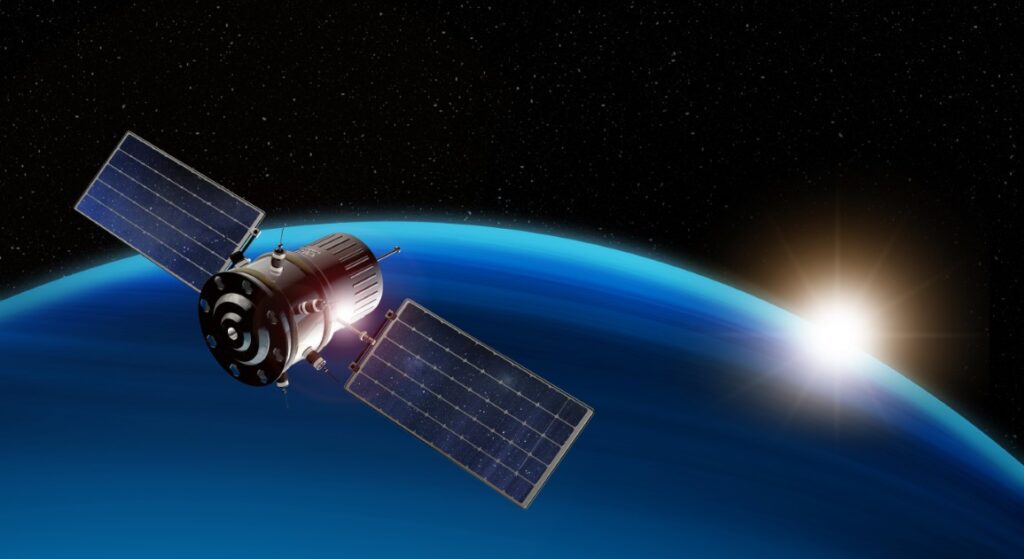
Imagine hiking in a remote mountain or sailing far off the coast, and yet your phone still gets full bars. No more dreaded “No Signal” warnings – because a satellite overhead has you covered. AST SpaceMobile is turning this vision into reality by building the first space-based cellular broadband network that connects directly to ordinary smartphones wikipedia. This ambitious project promises to eliminate cellular “dead zones” and bring high-speed 4G/5G coverage to even the most isolated corners of the globe. It’s an inspiring mission grounded in real technological breakthroughs – and it’s already making history.
What Is AST SpaceMobile?
AST SpaceMobile, Inc. is a publicly traded satellite manufacturer based in Midland, Texas, on a mission to extend cellular coverage worldwide using satellites. In essence, they are launching a constellation of satellites (the SpaceMobile constellation) that act like cell towers in space. Unlike traditional satellite phone services that require special devices, AST SpaceMobile’s network is designed to link directly with standard, unmodified smartphones on Earth. The goal is to deliver broadband cellular connectivity – including 4G LTE and 5G – globally, particularly in remote and underserved regions that lack terrestrial cell towers.
The need for such a network is clear. Today, nearly half of the global population still lacks access to cellular broadband coverage ast-science.com. AST SpaceMobile aims to bridge this digital divide from space. By deploying satellites that can communicate with everyday mobile phones, the company wants to ensure that no matter where you are – deep in a rainforest, out at sea, or in a rural village – you can stay connected. This bold vision has attracted major industry players and investors and positioned AST SpaceMobile as a pioneer in what could be a new era of ubiquitous connectivity.
How Does Space-Based Cellular Work?
How can a regular smartphone connect to a satellite in orbit? The answer lies in AST SpaceMobile’s cutting-edge technology. Each satellite in the SpaceMobile constellation is essentially a “cell tower in the sky” – equipped with an enormous flat antenna array and advanced radios that speak the same language as our ground networks.
A prime example is AST’s BlueWalker 3 test satellite. Launched in 2022, BlueWalker 3 unfurled a record-breaking 693-square-foot (64 m²) phased array antenna – roughly the size of a small apartment. This giant antenna (the largest ever deployed on a low-Earth orbiting communications satellite) is what allows the satellite to pick up signals from regular cell phones, even though they’re far below on Earth. In effect, AST’s satellites operate on standard mobile network frequencies (3GPP standards), so your phone treats the satellite like just another cell tower in terms of communication. No special SIM cards or hardware modifications are needed on the phone – a huge advantage over legacy satellite phones.
Pro Tip: You won’t need a new phone or gadget – AST SpaceMobile’s system works with the phone in your pocket, using ordinary 4G/5G signals. The satellites’ powerful phased-array antennas and onboard processing do the heavy lifting to link up with standard smartphones.
The SpaceMobile satellites (called BlueBird in their commercial version) are engineered to orbit at relatively low altitudes (LEO) and cover large areas on the ground with each satellite’s footprint. Because each satellite’s antenna is so large and sensitive, it can connect to phones across a broad area. BlueWalker 3 proved that even weak cell signals can travel hundreds of miles to space and back and still be usable. Building on that success, AST’s first five commercial satellites – BlueBirds 1–5 – were launched in September 2024 to begin creating an initial service network.
To start, this first batch of satellites will provide non-continuous (spot) coverage in select regions (for example, across parts of the U.S.) while the full constellation is built out. AST SpaceMobile ultimately plans to deploy around 90 satellites with huge antenna arrays to achieve seamless global coverage. Notably, this is far fewer satellites than other broadband constellations (which often require thousands of satellites) because each AST satellite can cover a large area and handle substantial traffic. In fact, the next-generation BlueBird satellites will be even more powerful: Block 2 BlueBirds (set to launch starting 2025) are over three times larger than the first ones and offer 10× the data capacity per satellite. This means fewer satellites can serve more users, keeping the constellation size efficient.
Making History: First Calls from Space to Smartphones
AST SpaceMobile’s journey has been punctuated by world-first milestones, proving that space-based cellular broadband isn’t just theoretical – it works. Here are some historic “firsts” the company has achieved so far:
- April 2023 – First Voice Call: Engineers made the first-ever two-way voice call directly between an ordinary cell phone and a satellite ast-science.com. Using the BlueWalker 3 satellite and an unmodified Samsung Galaxy S22, a call was placed from Midland, Texas to a mobile network in Japan (via Rakuten) on AT&T’s spectrum. This was the first time in history that a standard smartphone connected a voice call through a satellite in space – a major proof of concept for AST’s technology.
- June 2023 – First Space-Based Video Call: Building on the voice call, AST SpaceMobile completed the first cellular video call relayed from space. In a test supported by AT&T and others, a 4G video call was successfully conducted via the satellite, showing that even data-intensive services like video conferencing can work over the SpaceMobile link.
- September 2023 – First 5G Call: AST reached another milestone by making a 5G phone call using BlueWalker 3. In this test, a regular smartphone in a known cellular dead zone (Maui, Hawaii) connected through the satellite to reach a Vodafone engineer in Spain – all using standard 5G signals. They even achieved a 5G data session with ~14 Mbps download speed in a separate test, demonstrating that true mobile broadband from space is possible.
- Early 2024 – Emergency Network Tests: By January 2024, AST’s system was tested for public safety by connecting to FirstNet (the U.S. first responders network) via satellite. This suggests that in the future, emergency personnel could rely on satellite backup when disasters knock out ground towers.
Each of these “firsts” was more than just a publicity win – it validated key aspects of the network’s performance. For example, after the April 2023 voice call, AST confirmed that BlueWalker 3’s massive array was functioning as intended and that the satellite could support 2G, 4G LTE, and even 5G waveforms directly to phones. “Achieving what many once considered impossible, we have reached the most significant milestone to date in our quest to deliver global cellular broadband from space,” said AST SpaceMobile CEO Abel Avellan when that first call was announced. It was a triumphant moment that proved the concept and propelled the project into its next phase.
Partnerships and Global Reach
One reason AST SpaceMobile’s approach stands out is its close collaboration with the existing mobile industry. Rather than bypassing cell carriers, AST is partnering with them. In fact, the company’s vision is that users won’t sign up with AST directly or need any new device – instead, your normal mobile carrier will seamlessly roam onto the SpaceMobile satellite when you’re out of tower range. This means carriers can extend their coverage maps without having to build expensive rural towers, and users keep using their same phone and plan.
AST SpaceMobile has forged agreements with over 40 mobile network operators worldwide, whose combined customer base is an astonishing 2–3 billion subscribers. These partners include big names across every continent – companies like Vodafone, AT&T, Rakuten (Japan), Bell Canada, Orange, Telefónica, Telstra, MTN, Saudi Telecom, and many more fierce-network. Many of these operators are not just partners but investors in AST as well. For example, Vodafone and Rakuten were lead investors early on, and American Tower and Samsung’s venture arm also joined in funding the company. Such backing underscores the industry’s confidence in AST SpaceMobile’s solution.
The collaboration goes beyond just agreements; it’s active testing and integration. Nokia has signed on to provide networking gear (like 4G/5G base station technology) for AST’s system. Google teamed up with AST and AT&T to ensure Android phones will be ready to interface with satellites, optimizing the user experience for satellite connectivity on standard smartphones. And in 2024, Verizon committed $100 million in a partnership with AST to use satellites for expanding coverage in remote parts of the U.S.. These moves show that traditional telecom giants see AST’s satellites not as competitors, but as coverage extenders that can fill gaps in their networks.
Crucially, this business model means when AST’s service goes live, you might not even notice anything different – except that you suddenly have a signal in places you didn’t before. You could be a Vodafone customer in rural Africa or an AT&T customer on a backcountry hike, and when you venture off-grid, your phone will automatically connect through SpaceMobile. The billing and service could simply be handled by your carrier (perhaps as an added feature or roaming service). In short, AST SpaceMobile is bringing carriers on board to create a win-win: the carriers keep their customer relationships and expand coverage, while AST gains immediate access to billions of potential end-users via those carriers.
Challenges and the Road Ahead
Launching a first-of-its-kind space cellular network is not without challenges. One is purely logistical: building and deploying enough satellites. AST SpaceMobile has made significant progress here – after the successful BlueWalker 3 demo, the company launched five commercial BlueBird satellites in late 2024 via a single SpaceX Falcon 9 rocket. By October 2024, all five had unfolded their large antennas in orbit and begun telemetry tests. These satellites will start enabling preliminary services, but global coverage will require dozens more. AST plans to scale up production (they’ve stated they could build up to six satellites a month at full tilt) and use multiple launch providers to populate the constellation quickly. The eventual goal is around ~90 satellites for near-full global coverage, possibly fewer than 100 in total. As of the end of 2025, AST even launched its first next-gen BlueBird-6 satellite (on an Indian rocket) – a model 3.5× larger than the earlier ones, which will further boost network capacity wikipedia.org.
Another challenge is regulatory and environmental. AST SpaceMobile’s satellites are large and bright, which has raised concerns among astronomers and regulators. A fully deployed BlueWalker or BlueBird satellite can outshine many stars in the night sky. Recognizing this, AST has been working with organizations like the National Science Foundation to mitigate impacts on astronomy. The company has agreed to measures such as special anti-reflective coatings on satellites, adjusting satellite orientation during important astronomical observations, and sharing precise orbital data so that observatories can avoid pointed telescopes at those times. On the radio interference side, AST is coordinating with bodies like the National Radio Astronomy Observatory to ensure its signals and ground gateways don’t disrupt sensitive radio telescopes. And on the debris/space safety front, AST has an agreement with NASA to share orbit data and collision avoidance plans, given the large size of its spacecraft. These steps show AST is actively addressing the “space sustainability” aspect of launching a new constellation.
Competition is also heating up. AST SpaceMobile isn’t the only player eyeing direct-to-phone satellite service – companies like Lynk Global (which has tested satellite texting) and giants like SpaceX (partnering with T-Mobile for future Starlink-to-phone service) are in the race. That said, AST was first to achieve two-way voice and 5G data with a standard phone, and it has the backing of many carriers, which could give it a collaborative edge. While others talk about thousands of mini-satellites, AST’s strategy of fewer, high-capacity satellites working in tandem with mobile operators is a unique approach. It’s a challenging road ahead, but AST’s head start in testing and its industry alliances position it strongly in the emerging space-based connectivity sector.
Towards a Connected Future
AST SpaceMobile’s work is more than just a cool tech experiment – it has profound implications for global connectivity. If successful, it means anyone, virtually anywhere, could access broadband internet and phone service with a normal handset. Think about remote villages finally getting online education and telemedicine, hikers or sailors being able to call for help from anywhere, or simply never dropping a call due to coverage holes. As AST’s Chief Strategy Officer put it, “Cellular broadband for more people globally would help ease poverty, support economic development, build a more equitable digital society, and save lives.” By leveraging space to reach people who have been left on the wrong side of the digital divide, AST SpaceMobile’s network is indeed designed to support a “universal good space.com The coming years will be critical. As more BlueBird satellites launch and start providing service, we’ll begin to see the real-world impact of space-based mobile coverage. It might start with emergency responders and pilot communities, and then expand to consumer mobile plans as coverage and capacity grow. Keep an eye on AST SpaceMobile and its partners as they move closer to transforming the way the world connects. The next time you find yourself with zero bars on your phone, remember – soon a satellite might fill in that signal, ensuring that no call for help, no business communication, and no connection between loved ones is ever out of reach. The era of always-connected smartphones anywhere on Earth is on the horizon, and AST SpaceMobile is helping to make it happen.