

AG Magazine • Health & Nutrition
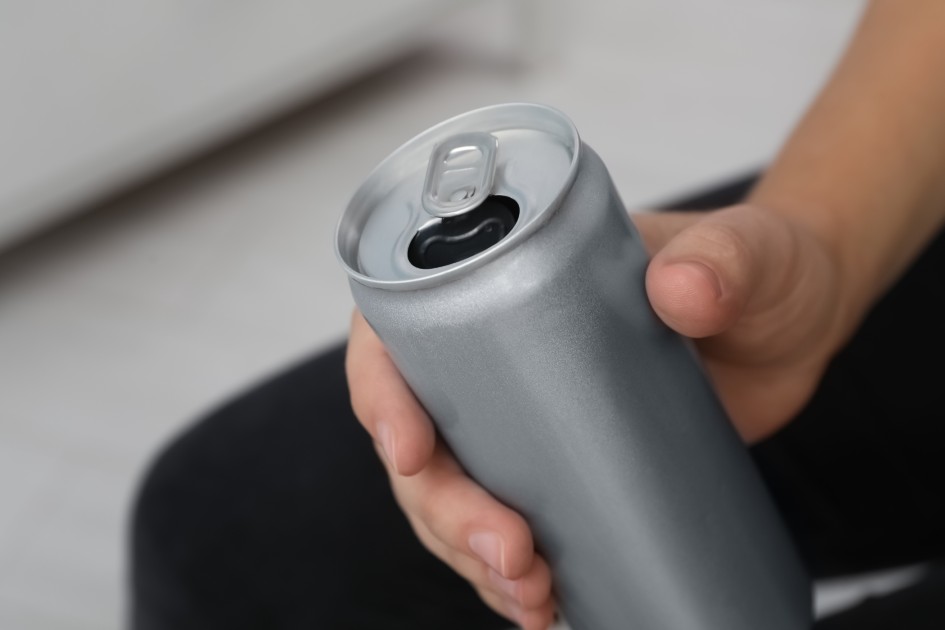
More cardiac arrest reports sounds alarming. When the subject is energy drinks and heart events, it deserves your attention — and then your scrutiny. A preliminary 2026 analysis presented at the American Heart Association’s Scientific Sessions found that cardiac arrest was mentioned about 11 times more often in FDA adverse event reports involving caffeine- or stimulant-containing products than in reports about other foods and supplements.
That number is real. What it means is a different question. Energy drink cardiac arrest reports count the stories people chose to file, not the thousands who drank a can and felt fine. So how do you separate a genuine warning from a statistical echo?
Get more like this — weekly.
One email a week. Research-backed wellness, translated into things you can actually do. No spam.
This guide shows what FDA report data can and can’t prove about energy drinks and heart events, what controlled research says about energy drink safety, and a simple caffeine framework you can use before your next can, shot, or scoop of pre-workout. Whether you train for a living or train hard on your own time, you’ll leave with a clearer read — and a plan.
What Do FDA Reports on Energy Drinks and Heart Events Actually Say?
FDA reports on energy drinks and heart events are voluntary submissions from consumers, clinicians, and manufacturers. They show which complaints appear more often alongside certain products. They cannot show how many people used those products without trouble, so they cannot reveal your personal risk. They flag possible patterns — a starting point for research, not a verdict.
In the AHA analysis, 854 of 28,345 FDA adverse event reports mentioned stimulant-containing energy drinks or supplements. About 45% of the heart-related reports in that group involved adults ages 18 to 34. The researchers themselves say the results cannot prove these products caused any event, and the abstract is preliminary until published as a full paper.
Does “11 Times More Reports” Mean 11 Times More Risk?
No. Picture a restaurant’s complaint box. If one café’s box holds more notes about upset stomachs, that’s worth checking — but it doesn’t mean you’re 11 times more likely to get sick there. Without knowing how many customers walked in, you can’t calculate a rate. A 2024 review of reporting-based safety signals makes the same point about spontaneous-report systems: with no data on how many people used a product, incidence can’t be estimated.
Five Blind Spots Hiding Inside Every Adverse Event Database
Before you share the next headline about energy drinks and heart events, run it through these five filters.
- No denominator. Reports count events, not exposures, so the actual rate stays unknowable.
- Uneven reporting. Only a fraction of events get filed, and media attention can drive reports up for the very product in the news.
- Grouped products. The AHA analysis compared stimulant products as a group with other foods and supplements, which makes it hard to pin a signal on one ingredient, dose, or product type.
- Mixed exposures. In a 2021 narrative review of published cases, 10 of 32 patients had also consumed another substance, including alcohol and amphetamine salts.
- Association is not causation. “Reported alongside” and “caused by” are different sentences. Use the first one.
Do Energy Drinks Cause Cardiac Arrest?
The honest answer: they may contribute in some people, and nobody can yet say how often. The same 2021 review counted three deaths among those 32 cases, each with a documented ventricular arrhythmia beforehand. A 2014 review of 17 published cases — foundational, though older — involved mostly people under 30, and its authors wrote that causality cannot be inferred from a case series.
Does that mean you can relax? No. Treat energy drink cardiac arrest reports as a reason to respect the dose and the combination, not as proof either way.
What Controlled Evidence Says About Your Heart
On energy drinks and heart events, trials can do what report databases can’t: compare a drink with a placebo under controlled conditions. In a 2019 randomized crossover trial in the Journal of the American Heart Association, 34 healthy adults drank 32 ounces of one of two commercial energy drinks or a placebo. Their QTc interval — a measure of the heart’s electrical recharge time — rose roughly 6 to 8 milliseconds more than with placebo, and systolic blood pressure ran about 5 to 6 mm Hg higher.
The trial did not observe arrhythmias. The authors called QTc prolongation a plausible explanation for the sudden cardiac arrests linked to energy drinks — a hypothesis, not a finding. The broader 2021 narrative review of 19 trials agrees: no serious arrhythmias appeared in trials, but QTc prolongation was the most consistent finding, and studies showing it tended to involve larger volumes, a median above 800 milliliters.
Zoom out and the picture stays careful. A 2026 American Heart Association scientific statement notes that most caffeine research is observational and coffee-focused, while data on high doses like those in energy drinks are limited and generally suggest cardiovascular harm. Dose and volume are the levers you control.
How Much Caffeine Is Too Much for Your Heart?
A 2025 Mayo Clinic guide says up to 400 milligrams a day seems safe for most adults — about two energy-shot drinks — but caffeine content varies widely, and some products don’t list it on the label. That variability is why pre-workout heart risk is a dose question.
Athletes get a second yardstick. A 2021 International Society of Sports Nutrition position stand found that 3 to 6 mg per kilogram of body mass consistently improves performance, that the minimum effective dose may be as low as 2 mg/kg, and that very high doses (around 9 mg/kg) bring frequent side effects with no extra benefit. Run the math: for an 80-kilogram athlete, 6 mg/kg is 480 milligrams — above Mayo’s general daily figure. The low end is the smarter starting line.
How to Use Stimulants Without Gambling Your Heart
Fear helps only if it changes what you do. These five moves turn scary headlines about energy drinks and heart events into a protocol.
- Count total caffeine, not cans. Add coffee, tea, shots, and pre-workout. The total is what your heart meets.
- Start low. Begin near 2 to 3 mg/kg before training, and earn any increase by how you feel.
- Keep combinations clean. Don’t stack energy drinks with alcohol or other stimulants.
- Treat unlabeled caffeine as unknown. If a product won’t state its caffeine content, leave it on the shelf.
- Know your red flags. Cleveland Clinic advises calling emergency services if palpitations won’t let up or come with fainting, chest pain or pressure, or trouble breathing.
Evidence on pre-workout heart risk specifically is thin: most of what we know comes from reports, small trials, and coffee-based research, so treat any claim — reassuring or alarming — as preliminary. If you have a heart-rhythm condition, high blood pressure, or take stimulant medication, talk with a clinician before using these products.
⚡ PRO TIP
Do the mg/kg math once and write it on your shaker bottle. Divide your weight in pounds by 2.2 to get kilograms, then multiply by 2 for a cautious dose or 3 for a moderate one — a 70 kg athlete lands near 140 to 210 mg. Add every caffeine source in your day before you open another can.
Read the Signal. Skip the Panic.
Here’s the reframe: a rising count of reports is a flashlight, not a verdict. It tells researchers where to look. It doesn’t tell you to fear every can, and energy drink safety still comes down to dose. Strong athletes treat data like training load — information to act on, not noise to freeze over.
Energy drinks and heart events deserve exactly that respect: honest dose math, clean combinations, and attention to your body’s warning signs.
Tonight, add up the caffeine in everything you use in a day, compare it to your mg/kg number, and retire any product that hides its total.



No one seems to have shared their thoughts on this topic yet
Leave a comment so your voice will be heard first.