

AG Magazine • Fitness & Performance
“Hybrid athlete” wasn’t a training category five years ago. Now it anchors gym selfies, race-day flatlays, and training logs that treat a deadlift PR and a 10K split as equally important data points. The identity describes someone who refuses to pick a lane — lifting heavy one day, rucking the next, running hard on the third — and treats strength and endurance as one project, not competing hobbies.
For decades, fitness culture pushed specialization: runners avoided the weight room for fear of getting “bulky and slow,” lifters avoided cardio for fear of losing size. Hybrid training rejects that trade-off outright. Its sudden mainstream pull is partly cultural — Hyrox turned hybrid competition into a genuine spectator sport — and partly physiological: bodies trained for both power and endurance appear to handle real-world stress better than bodies built for just one.
This piece traces where the hybrid athlete identity came from, what the research actually supports, where the trend outruns the evidence, and how to build a hybrid training week that holds up over years rather than one race cycle. If you’ve felt pulled between the treadmill and the rack, hybrid athlete training isn’t a compromise — it may be the smarter default.
What Is a Hybrid Athlete, Exactly?
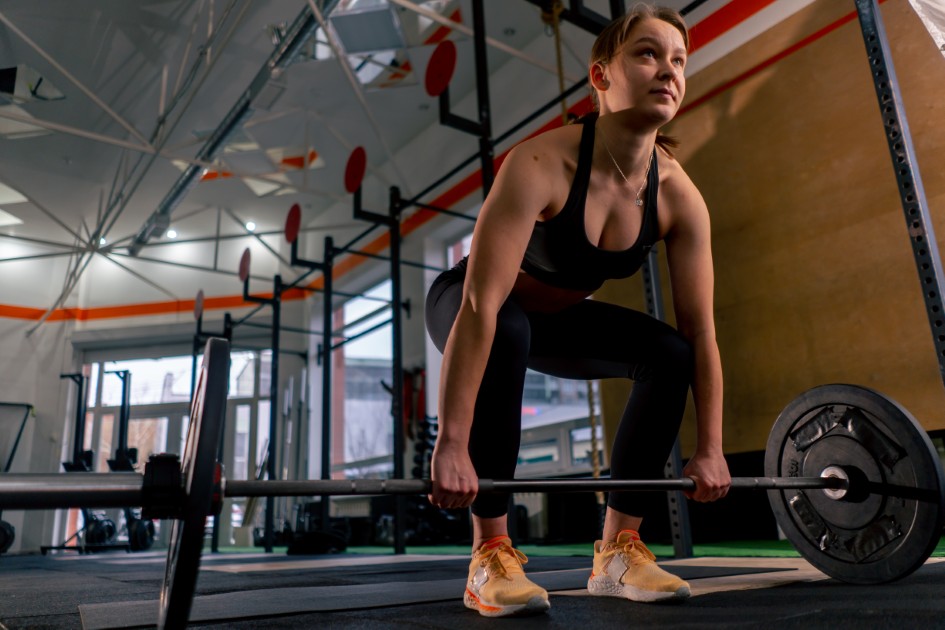
A hybrid athlete trains for strength and endurance simultaneously rather than specializing in one. In practice, that means structured resistance work — squats, presses, pulls — combined with cardiovascular training such as running, rucking, rowing, or Zone 2 cardio, inside the same weekly plan, usually oriented around a Hyrox event, a race, or a strength benchmark.
The label itself isn’t new — strongman competitors and CrossFit athletes have blended modalities for years. What changed is that hybrid training stepped out of niche competition circuits and into general-population fitness culture, helped along by wearables that let ordinary people track a cardio fitness estimate and a squat max inside the same app. A decade of single-metric tracking primed a lot of people to notice when one number looked strong while the other was quietly falling behind.
Why Strength and Endurance Together Beats Either Alone
The physiology backs the intuition. ACSM’s physical activity guidelines call for adults to combine regular aerobic activity with resistance training on at least two days a week, treating the two as complementary demands on a training week rather than competing ones — the physiological blueprint hybrid athletes have simply taken further.
The payoff extends past performance. A seven-year UK Biobank cohort study tracking more than 150,000 adults found that people with both low cardiorespiratory fitness and low grip strength had nearly double the odds of depression compared with people who scored high on both measures — and the combined fitness markers predicted mental health outcomes better than either measure alone. That finding is from 2020, and it remains a foundational reference point for researchers studying fitness and mood; it’s one of the more direct data points behind the idea that hybrid training protects more than a finish time.
Do You Have to Choose Between Lifting and Cardio?
Not entirely, but sequencing matters. A systematic review and meta-analysis examining concurrent-training studies found that performing resistance exercise before endurance work in the same session produced meaningfully better lower-body strength gains than doing cardio first — a real, if modest, edge for anyone training both qualities in one workout. That review dates to 2017, an older but still widely cited benchmark in the concurrent-training literature. The practical takeaway: lift first, then condition, when both land in the same session.
The Zone 2 Trap Hiding Inside Hybrid Training
Not every piece of the hybrid-training stack has equally strong evidence behind it. Zone 2 cardio — low-intensity aerobic work below the lactate threshold — became a hybrid-training staple on the promise that it uniquely builds mitochondrial density and fat-burning capacity. A 2025 narrative review in Sports Medicine examined that claim directly and found the current evidence does not support Zone 2 as the optimal intensity for mitochondrial or fat-oxidative gains in the general population — higher intensities produced equal or better adaptations across most of the studies reviewed.
Is Zone 2 Training Necessary for a Hybrid Athlete?
Not as a mandatory ingredient. Zone 2 still earns a legitimate place in a hybrid week: it’s recoverable, it’s compatible with an easy conversation or a podcast, and it adds aerobic volume without frying your nervous system ahead of a lifting session. But hybrid athletes who treat Zone 2 as the secret to their engine, rather than one useful tool among several, are chasing a claim the current research doesn’t fully back — the harder sessions are still doing more of the work.
Rucking: The Low-Tech Gateway Into Hybrid Training
If Hyrox is hybrid training’s competitive face, rucking is its on-ramp. Walking with a weighted vest or loaded backpack has surged as an entry point precisely because it needs no gym membership and no running background. According to Harvard Health, rucking can build muscle strength and bone density, improve the heart’s pumping ability, expand lung capacity, and increase caloric burn compared with unweighted walking — while cautioning that people with neck or back pain should skip the weighted vest, and suggesting a starting load around 10% of body weight.
It may be the purest expression of the hybrid athlete identity: one simple session that trains cardiovascular capacity and musculoskeletal load tolerance at the same time, with almost no equipment barrier. That accessibility is a large part of why rucking, rather than a gym-based hybrid template, is where a lot of newcomers actually begin.
Building a Hybrid Week That Actually Sticks
A sustainable hybrid training week doesn’t need six sessions or a Hyrox sponsorship. Three to four sessions, sequenced deliberately, cover both qualities without burning you out:
- Two strength sessions built around compound lifts — squat, hinge, press, pull — with full ranges of motion and progressive load.
- One conditioning session in a hybrid-style format: a loaded ruck, rowing intervals, or a short mixed-modality circuit.
- One easy aerobic session (Zone 2 or a brisk walk) for recovery volume — a supporting piece, not your primary engine builder.
- Strength before conditioning on days you combine both, and at least six hours of separation between a hard lift and a hard run if you can’t split them across days.
⚡ PRO TIP
If you’re new to combining modalities, track one number from each side of the equation — a load you can lift for five reps, and a distance you can cover in 30 minutes — and retest both every six weeks. Neither number stalling is the real proof hybrid training is working, not how sore you feel afterward.
Stop Choosing a Lane. Build the Whole Engine.
The hybrid athlete identity resonated because it named something a lot of people were already doing quietly: refusing to trade strength for stamina, or stamina for strength, because real life doesn’t ask you to choose. It isn’t just a trend hook — the research on combined training, weighted walking, and even the places where the evidence runs thin, like Zone 2, gives you an honest map instead of a hype cycle.
You don’t need a Hyrox season pass to start. Pick two strength days and one conditioning day this week, put the strength session first whenever they land on the same day, and give the plan six weeks before you judge it. That’s hybrid athlete training in its simplest, most durable form.