

AG Magazine • Tech & Innovation
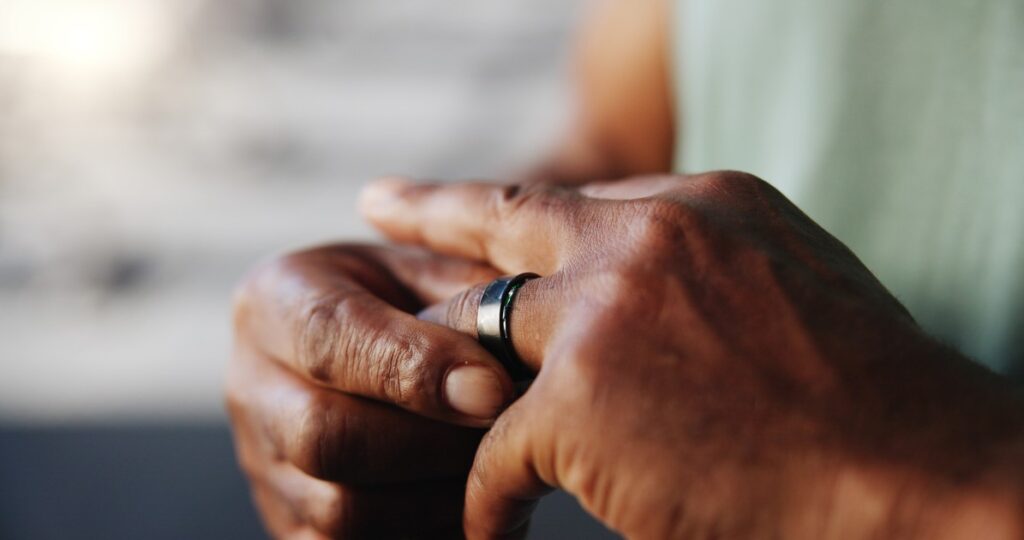
In a single week, Oura did three things that should make any health-conscious athlete look up. It revealed the Oura Ring 5 — a device 40% smaller than the last generation — introduced a feature called Health Radar that watches your biometrics for trouble, and quietly filed confidential paperwork for a Wall Street IPO. All of it landed days before the ring ships on June 4.
The pitch is seductive: a smart ring so small you forget it’s there, quietly flagging the moment your body drifts off course — before you feel a thing. That is the dream of predictive health, and the entire wearable industry is sprinting toward it. But seductive and proven are not the same thing.
So here is the honest version. This is what the Oura Ring 5 can actually do, what the science genuinely supports, and how to use biometric monitoring without letting it run your life. If you train hard and want a real edge, you deserve the straight story — not the launch-day hype.
Why the Oura Ring 5 Launch Feels Different
Oura didn’t just shrink last year’s ring. According to the company’s launch announcement and reporting from CNBC, the Oura Ring 5 was rebuilt from the inside out: 6.09 mm wide, 2.28 mm thick, with a redesigned sensor array, six to nine days of battery, and a $399 starting price. Days earlier, Bloomberg confirmed Oura had filed confidentially for a U.S. IPO at a roughly $11 billion valuation.
The timing tells its own story. Oura launched this ring barely a year and a half after the last one, far faster than its usual cadence, as rivals crowd into the smart ring space and an IPO looms. A company about to face public shareholders has every reason to prove it’s more than a sleep gadget.
But the hardware isn’t the headline. The pivot is. For years, a smart ring sold you a mirror — here is your sleep, your heart rate, your readiness. The Oura Ring 5 is selling you a smoke detector: software that doesn’t just record what happened, but watches for what’s coming.
What does the Oura Ring 5 actually do differently?
The short answer: it shifts from passive tracking to active pattern-watching. The same sensors now feed software designed to flag deviations from your personal baseline — the early, quiet signals you’d otherwise miss. That is a very different promise than counting steps, and it deserves a harder look.
What Is Oura’s Health Radar?
Health Radar is Oura’s predictive health system. It continuously monitors biometric signals — including blood pressure patterns during sleep and nighttime breathing — against your personal baseline, then alerts you when it detects a meaningful deviation. The goal is to surface potential problems early, before you notice symptoms, so you can act sooner.
The idea isn’t science fiction. Foundational research from Stanford, published in Nature Biomedical Engineering, found that consumer wearables could flag 63% of COVID-19 cases at or before symptom onset — some up to nine days early — simply by spotting elevations in resting heart rate against each person’s baseline. The same biometric monitoring logic underpins what Health Radar is attempting on the Oura Ring 5.
Can a smart ring really catch problems before you feel them?
Sometimes, and understanding the limits is the whole point. Your resting heart rate, temperature, and breathing often shift before you consciously feel ill, so a device that knows your normal can notice the drift. But ’can detect a pattern’ is not ’can diagnose a condition.’ A flag is an invitation to pay attention, not a verdict.
What Your Body Says While You Sleep
The most interesting Health Radar capabilities happen overnight, while you’re doing nothing at all. One tracks blood pressure patterns during sleep — and that matters more than it sounds.
Research in the American Heart Association journal Hypertension found that blood pressure measured during sleep is an independent predictor of cardiovascular events, with each 10-point rise in nighttime systolic pressure linked to roughly a 20% increase in cardiovascular risk. Nighttime numbers can reveal risk that daytime readings hide.
A second capability watches nighttime breathing for disruptions, which are common, frequently undiagnosed, and tied to the same cardiovascular pathways. For an athlete, that overnight picture is also a recovery signal: poor breathing and elevated nighttime strain help explain why a hard session left you flat the next morning. Here is the crucial caveat: a smart ring surfaces signals, not diagnoses. It is not a validated blood-pressure cuff or a clinical sleep study. If your ring flags the same thing night after night, the next step is a clinician — not a self-prescribed conclusion.
The Catch: When the Alert Cries Wolf
Predictive monitoring has a shadow side, and glossing over it would be dishonest. The upside is real, but so is the noise.
The landmark Apple Heart Study, published in the New England Journal of Medicine, enrolled more than 400,000 people. Among those who received an irregular-pulse alert and then wore a follow-up heart monitor, only about 34% actually had atrial fibrillation. In plain terms, most alerts were not the emergency they felt like.
That gap is the real danger of FOMO-driven biohacking: not that the technology fails, but that it succeeds at manufacturing anxiety. A steady drip of yellow flags can push you toward tests you don’t need — or, worse, train you to shrug off the one flag that matters. Oura is leaning into this tension too, pairing the ring with AI-assisted guidance to help interpret alerts, which can be useful but is no substitute for a doctor who knows your history. The answer isn’t to unplug. It’s to read your data like an adult.
Should you trust a notification from your ring?
Treat it as a prompt, not a diagnosis. One odd reading is noise; a sustained trend across several nights is signal. Bring the trend — not a single scary number — to a professional who can put it in context.
How to Use Predictive Health Without Losing Your Mind
Used well, biometric monitoring earns its place. A 2022 systematic review in The Lancet Digital Health found that wearable activity trackers nudged people to walk roughly 40 minutes — about 1,800 steps — more per day, with measurable gains in fitness. Visibility creates accountability, and accountability builds habit. So is the Oura Ring 5 worth pre-ordering before the IPO? Only if you’ll use it like this:
- Build a baseline first. Give any new device two to four weeks before you trust its alerts — it needs to learn your normal.
- Watch trends, not blips. One high-stress night means little. A pattern across a week means something.
- Pair flags with a clinician. Use Health Radar to start informed conversations, not to replace them.
- Protect your sleep from your tracker. If checking your score at 2 a.m. wrecks your rest, the tool is working against you.
⚡ PRO TIP
Switch off real-time notifications for the first month. Review your data once a day, in the morning, as a trend — not as a live feed. You’ll catch the patterns that matter and skip the false alarms that don’t.
Wear It for the Signal, Not the Panic
The Oura Ring 5 is a genuinely impressive piece of engineering, and Health Radar shows where wearables are heading: from tracking the past to anticipating the future. That future is worth being excited about. It’s also worth meeting with clear eyes.
The athletes who win with predictive health won’t be the ones who buy first or panic loudest. They’ll be the ones who treat their data as a coach, not a diagnosis — patient with the trends, skeptical of the spikes, and quick to loop in a professional when something holds. Before you pre-order the Oura Ring 5, decide how you’ll use the signal — then let it sharpen your training instead of hijacking it.