
A short daily mobility routine is a practical way to maintain joint range of motion, improve movement quality, and arrive to training “warm,” without adding fatigue. ACSM’s exercise-prescription guidance recommends flexibility work ≥2–3 days/week (daily is best), with brief holds and a total target of ~60 seconds per stretch; it also notes that a full routine for major muscle–tendon units can be done in about 10 minutes. bewegenismedicijn Evidence shows stretching can acutely increase range of motion (small effect), and longer-term stretching improves range of motion (moderate effect). For performance, avoid long static stretches immediately before power work—dynamic mobility is consistently safer for explosive output. link.springer
What the evidence supports
“Mobility” is best treated as active control of your available range of motion—useful for training quality and joint comfort—rather than a guarantee of injury prevention. ACSM emphasizes flexibility’s role in maintaining joint range of movement and recommends flexibility exercises for major muscle–tendon groups. Mayo Clinic notes stretching can improve flexibility and joint range of motion, and it highlights safe basics like warming up first, avoiding bouncing, and stopping short of pain. sciencedirect.com A large systematic review/meta-analysis found chronic stretch training increases joint range of motion (moderate overall effect). A separate meta-analysis found a single stretching bout produces small acute range-of-motion improvements.
For performance: ACSM warns stretching can negatively affect subsequent strength/power performance, especially when strength/power are important. bewegenismedicijn A network meta-analysis of warm-up methods reported static stretching reduced explosive performance while dynamic stretching improved it (with ~7–10 minutes of dynamic stretching showing the largest effect in that analysis).
For injury prevention: stretching alone is not the strongest lever. A well-known BJSM meta-analysis found consistent favorable estimates for most exercise-based prevention strategies except stretching, while strength training showed large risk reductions. Treat daily mobility as one layer in a wider “durable body” plan that still includes progressive strength work, which WHO recommends at least 2 days/week.
The mobility reset sequence
Time: 10–15 minutes
Equipment: none
Intensity: smooth, controlled; “mild tightness” only (never sharp pain).
Best time: after training or as a standalone reset; if used pre‑workout, emphasize the dynamic items and keep any holds brief.
Ten to fifteen minute flow with timings
| Segment | Time | Move | Key cue | Beginner modification | Advanced progression |
| Downshift | 1:00 | Nasal breathing + tall posture | Long exhale; ribs down | Sit on chair | Add 3 slow “brace/release” cycles |
| Spine | 1:30 | Cat–cow to “thread the needle” | Move vertebra by vertebra | Smaller range | Add 2‑sec pause at end range |
| Hips | 2:00 | 90/90 switches | Stay tall; rotate with control | Hands behind for support | Hover hands; slow eccentric |
| Hip flexors | 1:30 | Low lunge rocks + reach | Glute squeeze on back leg | Pad under knee | Add thoracic rotation each rep |
| Ankles | 1:30 | Knee‑to‑wall ankle rocks | Heel stays down | Reduce depth | Add 2‑sec end‑range hold |
| Thoracic | 1:30 | Open‑book rotations | Hips stacked; rotate upper back | Bend knees more | Straight‑leg version |
| Shoulders | 2:00 | Controlled arm circles | No shrug; slow and smooth | Smaller circles | Add “stop points” (3 pauses) |
| Integrated squat | 2:00 | Deep squat pry + stand | Feet rooted; elbows gently pry | Hold doorframe | Add paused breathing (3 breaths) |
Step‑by‑step cues
Cat–cow to thread-the-needle (1:30): On hands/knees, inhale as you gently arch, exhale as you round. Then slide one arm under the body, rotate gently through the upper back (not the low back). Keep pressure even through both hands. mayoclinic.org
90/90 hip switches (2:00): Sit with both knees bent, rotate both legs side‑to‑side like windshield wipers. Aim for “tall spine,” slow control, and pain‑free depth. If hips pinch, reduce range and sit on a folded towel.
Low lunge rocks + reach (1:30): Kneel into a lunge, tuck pelvis slightly, squeeze the glute of the back leg, then rock forward/back 6–10 times; add an overhead reach on the forward rock for a longer line.
Ankle rocks (1:30): Stand facing a wall, drive knee toward wall while keeping heel down. Switch sides each 3–5 rocks.
Open‑book rotations (1:30): Side‑lying, knees stacked, rotate top arm/back gently while keeping knees together. Breathe out into the rotation.
Controlled arm circles (2:00): Slow circles through the biggest pain‑free range you own today. Keep ribs down to avoid low‑back “cheating.”
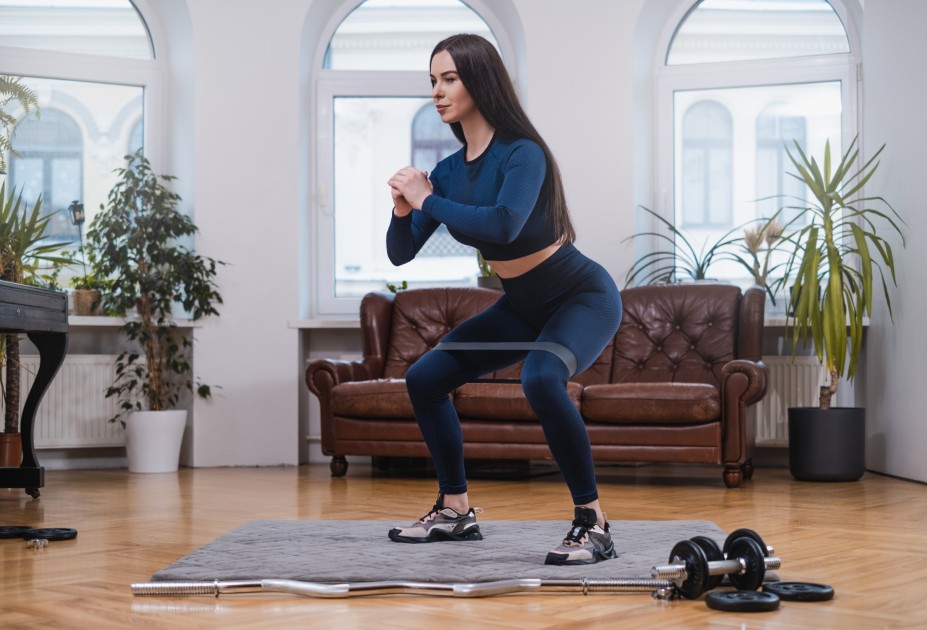
Deep squat pry (2:00): Sink into a deep squat that’s comfortable, hold elbows inside knees, gently shift weight side to side. If heels lift, elevate heels slightly (book under each heel) and keep breathing.
Four-week progression plan
Progress by time, control, and end‑range pauses (not by forcing depth). ACSM notes flexibility gains are greatest with daily practice; use these weeks to build the habit, then keep it as maintenance.
| Week | Total time | What changes | Goal |
| Week one | 10 min | Learn positions; no long holds | Consistency + pain‑free ROM |
| Week two | 12 min | Add 1–2 sec pauses at end range | Better control and symmetry |
| Week three | 15 min | Add reps; slightly deeper ROM (if pain‑free) | Smoother transitions |
| Week four | 15 min | Add 1 “focus joint” minute (ankles/hips/T‑spine) | Individualize + maintain |
timeline
title Four-week mobility progression
Week 1 : Learn flow : 10 min daily : Pain-free ranges
Week 2 : Add control pauses : 12 min daily : Symmetry focus
Week 3 : Add volume : 15 min daily : Smoother transitions
Week 4 : Personalize : 15 min daily : One focus joint
Weekly schedule
WHO recommends muscle-strengthening activity at least 2 days/week for adults (and multicomponent balance/strength work for older adults). This mobility reset complements—never replaces—those pillars. iccp-portal
| Day | Mobility reset | Training integration |
| Mon | 10–15 min | After lifting or evening reset |
| Tue | 10 min | Pre‑run/lift: emphasize dynamic items |
| Wed | 10–15 min | Recovery day: full flow |
| Thu | 10 min | Post‑session cooldown (brief holds ok) |
| Fri | 10–15 min | Full flow + focus joint |
| Sat | 10 min | “Minimum dose” maintenance |
| Sun | Optional 10–15 min | Light reset or rest |
Safety notes and common mistakes
“Don’t consider stretching a warmup.” Warm up with easy movement first if you feel cold/stiff. Avoid bouncing, don’t push into pain, and prioritize left/right symmetry—uneven flexibility can be a risk factor for injury. mayoclinic.org If you’re about to sprint or lift heavy, keep static holds short and bias toward dynamic mobility because prolonged static stretching can reduce explosive output. If you have an injury or medical condition, Mayo Clinic advises adjusting techniques and consulting a clinician when needed.