
Looking to spice up your Pilates routine? The answer might be as simple as a Pilates wand – a lightweight bar that can take your workout to the next level. Pilates is famous for building core strength, flexibility, and balance uclahealth.org, and incorporating a wand introduces new resistance and support to engage your muscles. Whether you’re a beginner, an older adult seeking a safe exercise option, or even a Pilates instructor seeking new class ideas, Pilates wand workouts can be adapted to suit your needs. In this article, we’ll explain what a Pilates wand is, its benefits, a few exercises, and tips to get you started.
What Is a Pilates Wand?
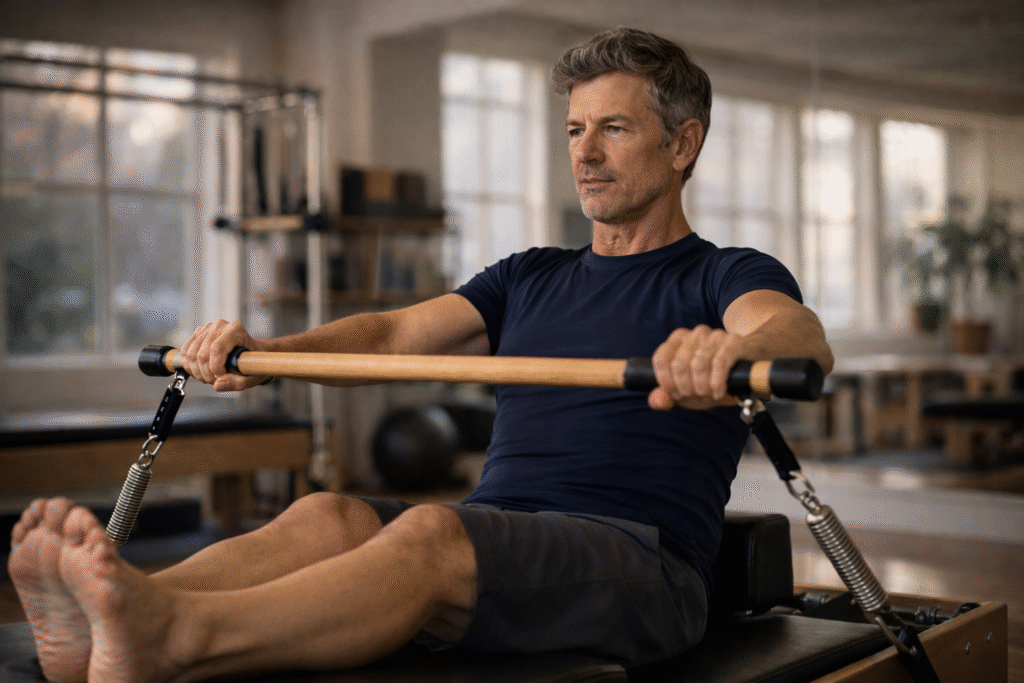
A Pilates wand (also called a Pilates stick or bar) is a lightweight 2½- to 3-foot rod used as a prop in Pilates. You can use it by itself, or in some versions, attach resistance bands to mimic the springs of Pilates machines. But you don’t need any special gear – even a simple dowel, broomstick, or golf club can serve as your Pilates wand. This versatile tool adds extra resistance, provides balance assistance, and guides your alignment during exercises, myonlinepilates.com, helping you deepen stretches, engage your core, and maintain good form throughout each movement.
Benefits of Pilates Wand Workouts
For such a simple piece of equipment, the Pilates wand delivers big benefits. Here are some key advantages of incorporating a wand into your Pilates routine:
- Stronger Core & Stability: Pilates has always been core-centric, and adding a wand makes your midsection work even harder. By introducing resistance (or simply the challenge of controlling a movable bar), the wand forces your abs and stabilizer muscles to engage more deeply to maintain balance. Over time, this leads to a stronger, more stable core – the foundation for nearly every movement you do.
- Better Posture & Alignment: One big perk of Pilates is better posture, and the wand accentuates this benefit. Many wand exercises require you to sit or stand tall and keep the bar level, which trains you to maintain proper spinal alignment. By strengthening the muscles around your spine and shoulders, the Pilates wand helps you build a stronger, more aligned frame and can even counteract slouching.
- Enhanced Balance & Coordination: Using a wand in Pilates can improve your balance and coordination. Stabilizing a bar while moving engages your core and small stabilizers, translating to better balance in daily life. Pilates training can improve balance and reduce fall risk in older adults uclahealth.org. The wand also serves as a support for balance exercises (like a stabilizing cane) for those who need it, providing confidence as you build stability.
Pilates Wand Exercises to Try
Ready to put your Pilates wand to work? Here are a few beginner-friendly exercises that demonstrate how this prop can level up your Pilates routine. Remember to move slowly and focus on form. If anything feels too difficult, modify the movement or practice it without the wand until you build strength.
- Squat with Overhead Press: Stand with feet hip-width apart, holding the wand at shoulder height. Lower into a squat, then stand back up and press the wand overhead. This compound move strengthens your legs and glutes while also working your shoulders and core litmethod.
- Standing Row: Stand tall, holding the wand at waist level, arms extended. Pull the bar toward your torso, squeezing your shoulder blades together, then slowly extend your arms forward. This targets your upper back and biceps, helping improve posture and shoulder stability.
- Seated Half Roll-Back: Sit on the floor (or a chair) with knees bent and feet flat, holding the wand in front of you at shoulder height. Tuck your tailbone under and slowly roll halfway back until your abs engage, then curl back up to sit tall. The wand helps you balance and maintain alignment as you build core strength and control.
Tips for Getting Started
Approach Pilates and wand workouts with the right mindset and technique. Keep these tips in mind to stay safe and get the most out of your practice:
- Master the basics first: Before adding the wand, ensure you’ve learned fundamental Pilates form and core engagement. Experts emphasize the importance of a solid mat Pilates foundation before using props marieclaire.co.uk. A good foundation helps you avoid injury and get better results.
- Focus on form, not momentum: Perform each movement slowly and with intention. Keep your core engaged and avoid jerking the bar. The goal is to use the wand to enhance the exercise, not to swing or toss it around.
- Use support if needed: If you have balance issues or limited strength, start with exercises in a chair or near a wall. The wand can provide extra support for balance moves while you build confidence and stability. As you get stronger, you can progress to more challenging standing exercises.
- Listen to your body: Pilates should never cause pain. Pay attention to your body’s signals and modify or rest as needed. Over time, you’ll gain flexibility and strength – there’s no rush. Stay consistent (aim for a couple of sessions per week) and enjoy the journey.
The Pilates wand could become your new favorite fitness prop. This simple tool can help you feel stronger, stand taller, and move more freely in daily life. So roll out your mat, grab your wand, and give it a try – your body will thank you. You’ll reap benefits: improved strength, flexibility, and balance.